


We recommend ActiveCampaign. It’s our pick for the best general email automation platform for small businesses in our email marketing software comparison, we’ve run it across eight portfolio companies, and we’ve sent over 124,000 emails through it. I’m telling you this upfront because an “ActiveCampaign alternatives” article from us is a slightly odd thing to write.
But it needs writing. After the 2024 pricing restructure pushed many long-term customers’ bills up 30-40%, and the November 2025 billing change meant new accounts now pay for unsubscribed and bounced contacts, more people are asking us about alternatives than at any point since I started using the platform in 2012.
And the honest answer is that for some of those people, leaving is the right call. Our own ActiveCampaign review rates it 3.9/5 — best-in-class automation, held back by an average CRM and pricing that stings at scale. If your reason for leaving matches one of the eight below, there’s a better tool for you.
The quick answer, by reason for leaving
- You run an online store → Omnisend
- The bill is the problem → Brevo
- You’re a creator building an audience → Kit
- You want simpler email with a sensible AI layer → Campaigner
- You’re B2B and need a proper CRM suite → HubSpot
- You’re running a newsletter as a business → Beehiiv
- You’re a developer who just needs an API → Resend
- You want automation on a budget, all in one place → GetResponse
Here’s how they compare at a glance. Prices are the entry points we verified for our April 2026 comparison — annual billing typically saves 15-20% on top.
| Tool | Best for | Price from | Free plan |
|---|---|---|---|
| Omnisend | eCommerce stores | $16/mo (500 contacts) | Yes — 250 contacts |
| Brevo | Large lists on a budget | $9/mo (5,000 emails) | Yes — 300 emails/day |
| Kit | Creators | $0 (to 10K subscribers) | Yes — 10,000 subscribers |
| Campaigner | Simple AI-assisted email | $14/mo (1,000 contacts) | No — 30-day trial |
| HubSpot | B2B with full CRM needs | $15/mo per seat | Yes — free CRM |
| Beehiiv | Monetised newsletters | $0 (to 2,500 subscribers) | Yes — 2,500 subscribers |
| Resend | Developers (API-first) | $0 (3,000 emails/mo) | Yes — 3,000 emails/mo |
| GetResponse | Budget all-in-one automation | $19/mo (1,000 contacts) | Yes — 500 contacts |
For reference, ActiveCampaign starts at $15/mo for 1,000 contacts, with no free plan — just a 14-day trial.
Why people leave ActiveCampaign in the first place
Our migration data shows three recurring reasons, and it’s worth being clear about them because they determine which alternative fits.
The first is price at scale. ActiveCampaign Starter runs $149/mo at 10,000 contacts and $1,199/mo at 100,000. Fine if automation is driving revenue, painful if you mostly send broadcasts.
The second is the billing changes. The 2024 restructure hiked existing customers’ bills by 30-40% with little warning, and in November 2025 ActiveCampaign changed its billing policy so that new accounts are charged for all contacts — including unsubscribed, bounced, and unconfirmed ones. Accounts created before November 2025 are grandfathered on active-only billing, but if you’re signing up fresh, your effective cost per engaged contact is higher than the pricing page suggests.
The third is fit. The CRM scored 2.5/5 in our review, the reporting looks like a dull PowerPoint deck, and if you only send a monthly newsletter you’re paying for a workflow engine you’ll never switch on.
Right then. The alternatives.
01Omnisend — if you run an online store
This is the one migration I’d describe as an upgrade rather than a trade-off, provided you’re pure-play eCommerce. Omnisend scored 4.6/5 in our full review — the highest rating we’ve given an email platform.
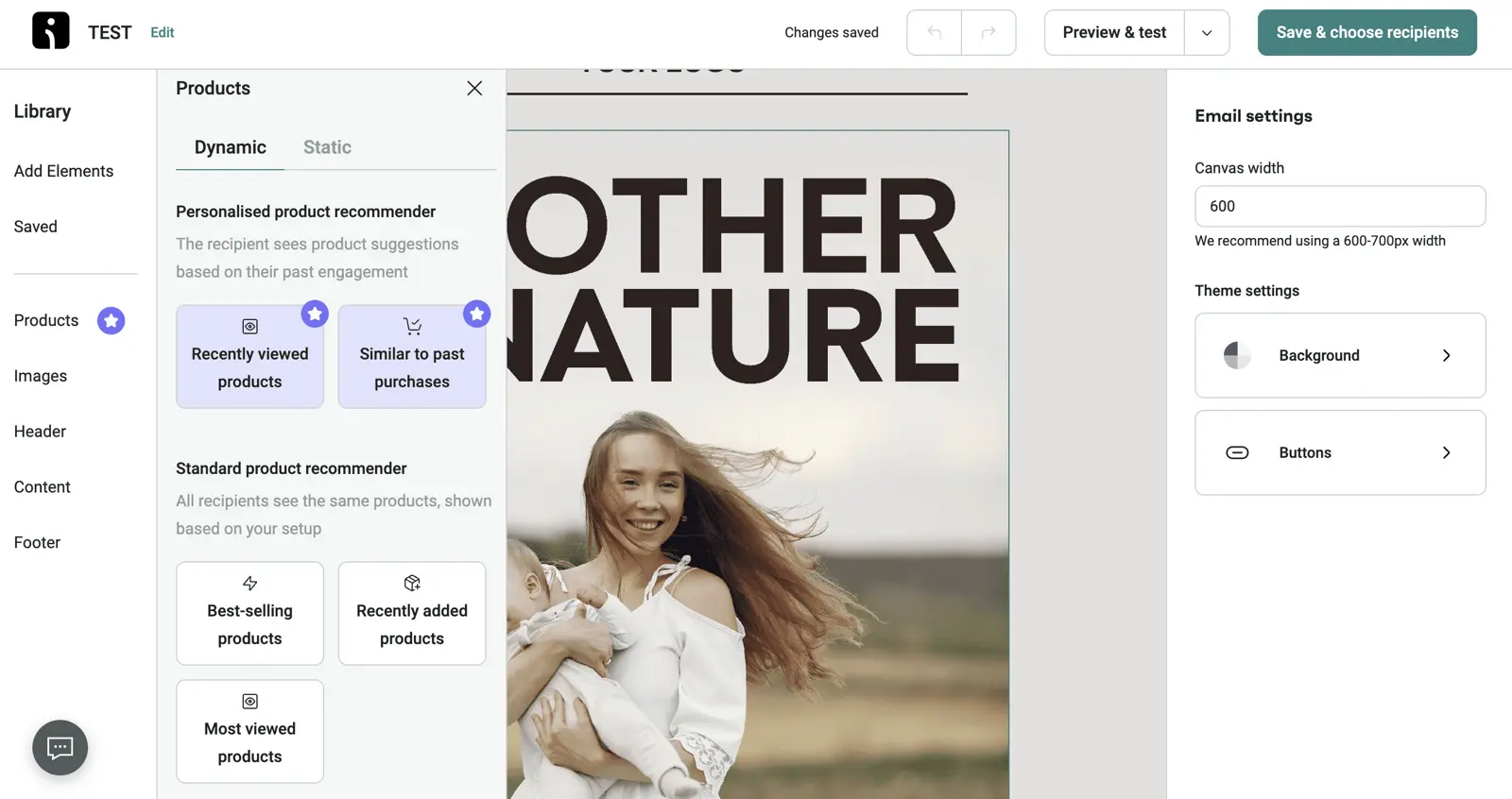
The feature that earns it is revenue attribution. Every dollar of revenue is traced back to the exact email, SMS, automation step, or A/B test variant that drove it — based on actual order data from your store, not UTM guesswork. ActiveCampaign’s eCommerce reporting is decent; Omnisend’s is the entire point of the product.
It’s also cheaper where it matters. At 10,000 contacts, Omnisend Standard is ~$132/mo versus ActiveCampaign’s $149 on Starter or $189 on Plus. Setup takes 15-20 minutes when you connect Shopify or WooCommerce, and migration from ActiveCampaign is free and done for you on any paid plan — their team rebuilds your automations rather than leaving you with a blank canvas.
The downside is blunt: outside eCommerce, Omnisend is the wrong tool. Its feature set assumes you sell products online, the Standard plan caps sends at 12x your contact list per month, and the template builder is mid-tier. If you’re half store, half service business, ActiveCampaign’s flexibility still wins.
If you’re weighing Omnisend against Klaviyo rather than ActiveCampaign, we’ve covered that trade-off in our Klaviyo vs Omnisend comparison.
02Brevo — if the bill is the problem
Brevo prices by email volume rather than contacts, and that one difference changes everything for large lists that send infrequently. Unlimited contacts on every plan — including the free one, which allows 300 emails a day.
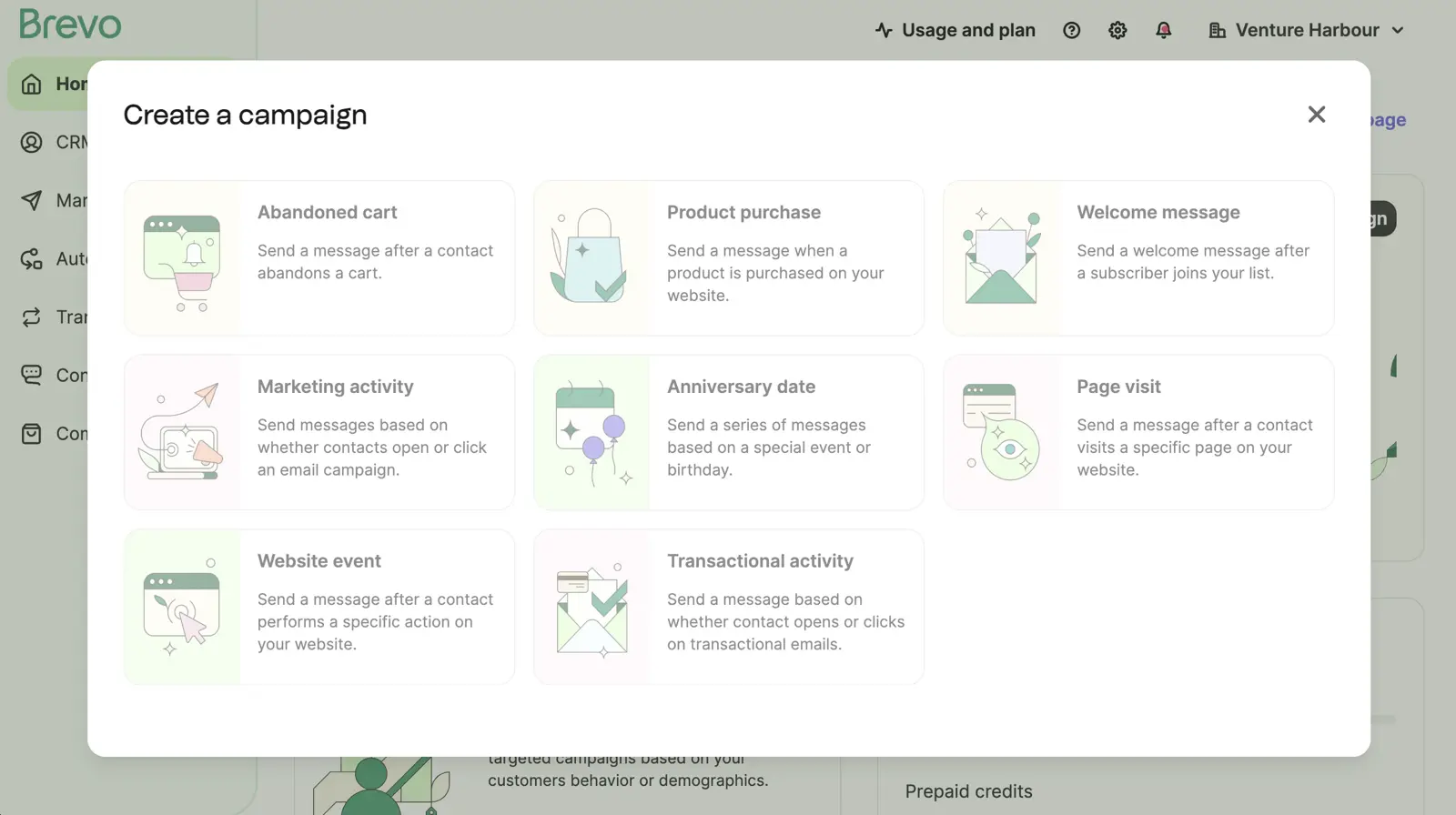
The maths at scale is stark. A 25,000-contact list emailing weekly (roughly 100,000 emails a month) costs around $129/mo on Brevo Standard, versus $389/mo on ActiveCampaign Plus. We’ve sent 640,000+ emails through Brevo across our ventures, mostly transactional, and deliverability has held up without drama. Transactional email is included on every plan, which most competitors treat as a separate product.
The trade-off is automation depth. Brevo handles linear sequences well, but there’s no split-testing of automation paths and no per-contact predictive sending below the Standard plan. If your ActiveCampaign account is full of multi-branch workflows and running split tests, you’ll feel the ceiling within a month.
One more caveat: Brevo restructured its own plans in October 2025, moving WhatsApp up to the Professional tier (from $499/mo). Nobody in this category is above shuffling features upstream.
03Kit — if you’re a creator
I use Kit for my YouTube channel’s newsletter, so this recommendation comes from a live account rather than a test one. The free plan covers up to 10,000 subscribers with unlimited broadcasts, landing pages, and forms — the most generous free tier in the category by a distance.
The landing pages are the quiet star. They’re minimal by design — no sidebars, no distractions — and my lead magnet pages consistently convert at 30-50%. Everything else is unremarkable in a good way. It captures emails, sends newsletters, and stays out of your way.
Coming from ActiveCampaign, the loss is real though. The free plan includes just one basic visual automation — full sequences need the Creator plan at $33/mo for 1,000 subscribers. There’s no CRM, no lead scoring, no predictive anything. If your business evolves beyond “creator building an audience,” you’ll be migrating again.
That’s the deal: Kit is brilliant inside its niche and wrong outside it.
04Campaigner — if you want simpler email with useful AI
Campaigner is for people who looked at ActiveCampaign’s automation canvas and thought “I will never use any of this.” It sends email well, ships AI focused on the two tasks that move metrics — subject lines and segmentation — and skips the marketing-suite sprawl.
At $14/mo for 1,000 contacts it undercuts ActiveCampaign’s $15 entry point, and the gap widens fast: $79/mo at 10,000 contacts versus ActiveCampaign’s $149-189. The 30-day free trial includes full AI access (most rivals give you 14 days), and its Audience Intelligence benchmarks suggestions against your own historical open rates rather than a generic dataset. Campaigner has been a deliverability-first ESP for 20+ years, and independent inbox tests consistently place it in the top tier.
The catch is the ceiling. Branching and conditional logic are basic, the AI doesn’t learn from your account over time the way Active Intelligence does, and there’s no free plan. Anyone with serious workflow ambitions will outgrow it within a year — at which point you’ll be eyeing ActiveCampaign again. (There’s a certain irony in that.)
05HubSpot — if you’re B2B and need the full suite
HubSpot fixes ActiveCampaign’s weakest area. The CRM we scored 2.5/5? HubSpot’s is the best in the business, and because the CRM, email, and website tools are all native, you get true closed-loop attribution — you can walk into a board meeting and say “this email campaign generated £42,000 in pipeline” and mean it.
The cost is eye-watering. Starter is $15/mo per seat, but the features that make HubSpot worth using live on Professional at $890/mo, with a mandatory $3,000 onboarding fee, and you’ll likely end up hiring a specialist at £80-150/hour. That’s not a pricing model, it’s a commitment ceremony.
My rule of thumb: HubSpot makes sense for B2B service companies doing £1M+ in revenue with sales cycles over 30 days that need email-to-revenue attribution. For everyone else, ActiveCampaign delivers most of the automation value at a fraction of the spend — the full trade-off is in our ActiveCampaign vs HubSpot comparison.
06Beehiiv — if the newsletter is the business
I run my personal newsletter on Beehiiv, so I’ve seen both what makes it compelling and what makes it frustrating.
Compelling first: if you’re monetising a newsletter, nothing else comes close. Paid subscriptions with a 0% platform cut on the Scale and Max plans, a built-in ad network, cross-promotion between publications, and flat pricing that scales absurdly well — Scale runs $43/mo covering up to 100,000 subscribers. ActiveCampaign Starter at that list size is $1,199/mo. Not a typo.
Frustrating second: on a free, non-monetised newsletter, features I expected as standard — custom HTML, A/B testing — are locked behind paid plans, and there’s no marketing automation to speak of. No CRM, no lead scoring, no multi-step workflows. It’s a newsletter monetisation platform, not an email marketing tool, and the odd bug reminds you it’s a young platform scaling fast.
Leave ActiveCampaign for Beehiiv only if “newsletter as product” describes your business model. If it does, it’s the obvious choice.
07Resend — if you’re a developer
Resend is barely comparable to ActiveCampaign, which is precisely why it belongs on this list. Some people on ActiveCampaign never needed marketing software — they needed their app to send emails.
If that’s you: Resend’s free tier covers 3,000 emails a month, the Pro plan is $20/mo for 50,000 emails, and setup is a matter of verifying a domain and grabbing an API key. I’ve used it across half a dozen micro-SaaS projects and I don’t think I’ve ever actually paid for it. If you’re vibe coding a project in Lovable or Claude Code, most AI tools will simply ask for the key and wire it up.
The downside is the definition: there’s no editor, no campaigns, no automations, no forms. Everything happens through code. And a plea while I have you — don’t use AI coding tools to build your own email marketing platform on top of it. Deliverability infrastructure, bounce handling, and compliance are exactly the problems a monthly subscription makes someone else’s.
08GetResponse — if you want budget automation, all in one place
GetResponse is the closest like-for-like replacement on this list — a proper automation builder, landing pages, forms, and lead scoring — at a meaningfully lower cost curve. $19/mo at 1,000 contacts, $79/mo at 10,000 (versus ActiveCampaign’s $149-189), and $539/mo at 100,000 versus ActiveCampaign Starter’s $1,199. The 18% annual discount is the best in the category, and registered non-profits get 50% off every paid plan.
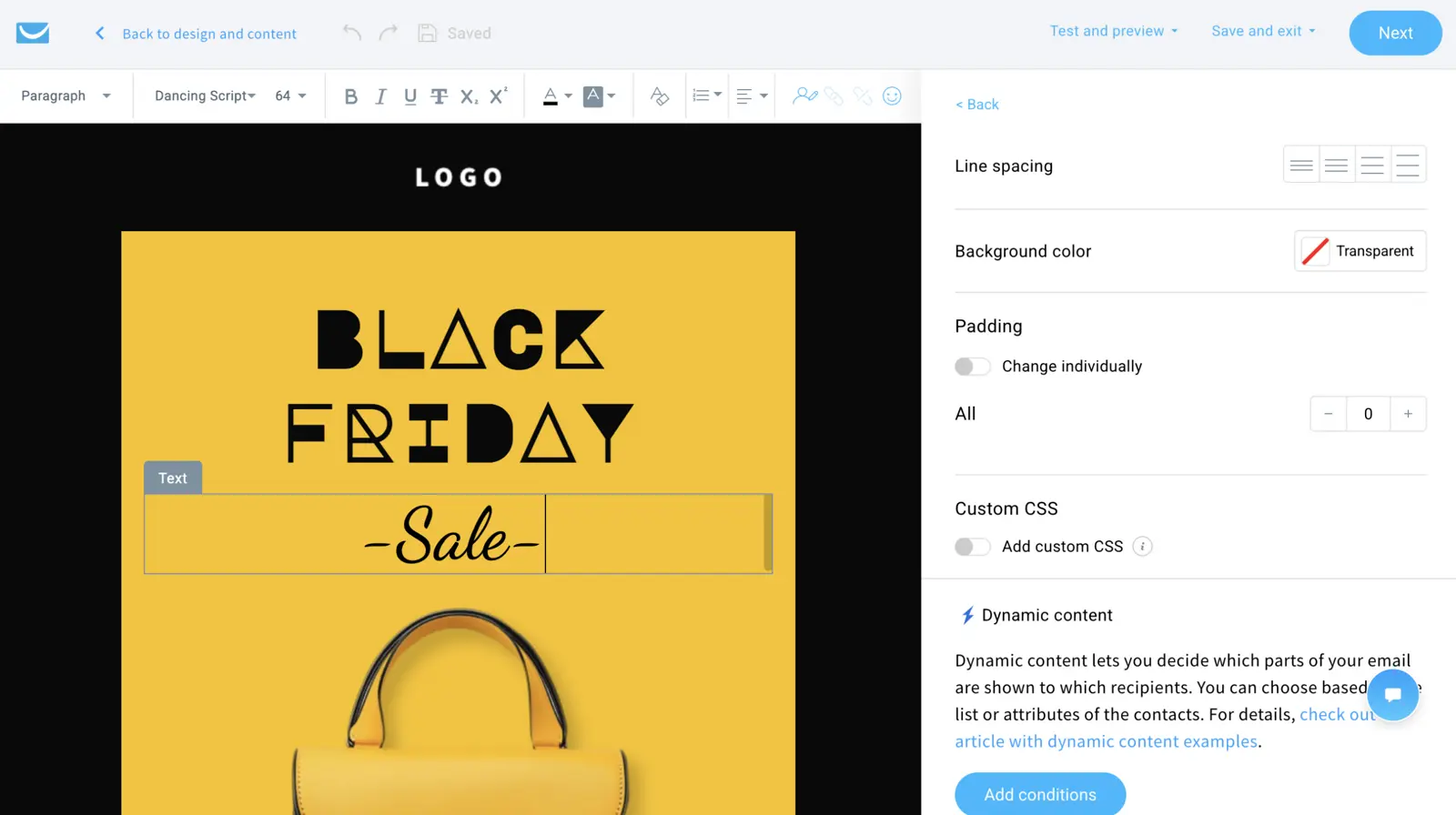
It also bundles things ActiveCampaign doesn’t: native webinars (10 attendees free, 100 on the Creator plan) and a website builder. I’ve used GetResponse since 2010 and once described it as a budget HubSpot — similar breadth at a fraction of the cost.
That framing cuts both ways. Nothing in GetResponse is best-in-class: the Starter plan is limited to a single automation workflow, there’s no split-testing of automation paths, and the older templates still look like 2018. You’re trading ActiveCampaign’s depth for breadth and a smaller invoice. For teams running standard welcome, nurture, and abandoned-cart flows, that’s a fair trade.
What about Mailchimp?
It’s the alternative people ask about most and the one I recommend least. Mailchimp is cheaper at 10,000 contacts (~$110/mo versus $149+), and its email builder remains one of the best we’ve used. But moving from ActiveCampaign to Mailchimp means downgrading in the one area ActiveCampaign leads the market — automation and segmentation.
Our migration data is unambiguous: users consistently move from Mailchimp to ActiveCampaign, and almost nobody goes the other way. If price is your reason, Brevo, Campaigner, or GetResponse are all stronger downgrades. The full head-to-head is in our ActiveCampaign vs Mailchimp comparison.
When you should stay on ActiveCampaign
Having spent an entire article talking you out the door, here’s the case for staying — because for a lot of readers, it’s the stronger one.
If your list has meaningful revenue attached and automation drives it, nothing above replaces what you have. The workflow builder — 135+ triggers, 500+ pre-built recipes — is the deepest of any marketing automation software we’ve tested, and it’s one of the few platforms that can split-test entire automation paths, not just emails. Running our sequences as continuous split tests produced 4-5× uplifts in open rates on our most-tested flows. None of the budget alternatives can run that experiment at all.
The boring bits matter too. Across our accounts we saw a 99.4% delivery rate, and ActiveCampaign’s 94.2% inbox placement in independent testing sits well above the ~83% industry average. Active Intelligence learns from your campaign history in a way the ChatGPT-wrapper AI in cheaper tools doesn’t.
And one practical point: if your account predates November 2025, you’re grandfathered on active-only billing. Leave, and any future ActiveCampaign account pays for every unsubscribed and bounced contact. That’s a one-way door.
For what it’s worth, I moved our early-stage ventures off ActiveCampaign — pre-revenue projects don’t need automation depth, and I’ve said as much in our review. But the moment one of them has a list with revenue attached, I’d migrate back in a heartbeat. If that describes your business today, start with the 14-day trial rather than the exit paperwork.
Final words
Match the tool to the reason you’re leaving, not to a feature list. Store owners should take Omnisend’s free migration and not look back. Big lists on tight budgets should run the Brevo maths. Creators and newsletter operators have purpose-built homes in Kit and Beehiiv, and B2B teams with real budgets can buy their way out of ActiveCampaign’s CRM problem with HubSpot.
And if none of those reasons is yours? You’re probably not leaving — you’re annoyed about the pricing. Fair. So was I. It’s still the best automation platform we’ve used.