


Across 14 years, we’ve sent more than 764,000 emails through the platforms below. We also tested Mailchimp across eight areas in September 2026, and it is now a paid Test Lab partner. Two platforms restructured pricing on us mid-contract.
One costs about a third of its closest peer for similar work. (And if you’re weighing the CRM side as heavily as email, our guide to the best enterprise CRM platforms goes deeper on that.)
Top enterprise email marketing platforms
| Tool | Best for | Enterprise plan from | Onboarding |
|---|---|---|---|
 ActiveCampaign ActiveCampaign | Mid-large enterprise marketing automation | $145/mo+ | Included |
 HubSpot Marketing Hub HubSpot Marketing Hub | B2B with CRM-led attribution | $3,600/mo | $7,000 mandatory |
 Omnisend Pro Omnisend Pro | Enterprise eCommerce | $59/mo+ (custom 150K+) | Free done-for-you migration |
 Mailchimp Premium Mailchimp Premium | Newsletter-led teams that value speed | $350/mo | Personalised onboarding |
 Brevo Enterprise Brevo Enterprise | Transactional + marketing at volume | Custom | Custom |
 Salesforce Marketing Cloud Salesforce Marketing Cloud | Salesforce CRM users | Custom (~$1,250/mo+) | $50k–250k typical |
 Adobe Campaign Adobe Campaign | Adobe Experience users | Custom | Six-figure typical |
 Constant Contact Constant Contact | Basic email marketing | ~$449/mo | Included |
Mailchimp pricing verified September 2026; other prices verified May 2026. “Custom” means the vendor doesn’t publish enterprise pricing; expect to negotiate based on contact volume, channels, regions and integration scope.
What “enterprise” means in this category
In practice there are three shapes of enterprise buyer, and the right tool changes for each:
-
Mid-market enterprise (250–2,000 employees, 10K–250K contacts). Procurement matters but isn’t ruthless. SSO and SOC 2 are required; data residency is preferred but not contractually critical. Most of these teams are best served by ActiveCampaign Enterprise, HubSpot Enterprise or Omnisend Pro depending on whether their core motion is automation, B2B sales, or eCommerce.
-
Large enterprise (2,000+ employees, 250K+ contacts). Procurement is a multi-quarter exercise. SSO, SOC 2 Type II, data residency in named regions, named CSM, audit trails and role-based permissions are all required. Salesforce Marketing Cloud and Adobe Campaign make the shortlist here. HubSpot Enterprise and ActiveCampaign Enterprise still compete, particularly for B2B service businesses.
-
Regulated enterprise (financial services, healthcare, government, life sciences). HIPAA, FedRAMP, FCA-aligned controls, and multi-region data residency contracts. The shortlist narrows quickly to Salesforce Marketing Cloud, Adobe Campaign, and occasionally HubSpot Enterprise.
What you pay for at every tier is governance, support and integration. All eight platforms can send an email and run an automation. The differences show up at 2am when a workflow breaks, a deliverability incident hits, or an audit needs answering.
01ActiveCampaign Enterprise
Test Lab Partner (Paid)ActiveCampaign Enterprise is a member of our Test Lab Programme, which means we receive a fee to conduct hands-on testing of their platform. Learn more about our Test Lab Programme →Best for larger teams building and improving email automations alongside an existing CRM.
We started using ActiveCampaign in 2014 and have rolled it out across eight portfolio companies since. It is also a paid Test Lab partner. Its CRM still feels too basic for a large sales team, but the automation builder is why we keep using it.
Active Intelligence, its built-in AI, is now another reason. Based on the tasks in our ActiveCampaign review, we’d put it among the best AI offerings in email marketing for teams managing complex sequences. It still needs someone who understands the campaign to check its work before anything goes live.
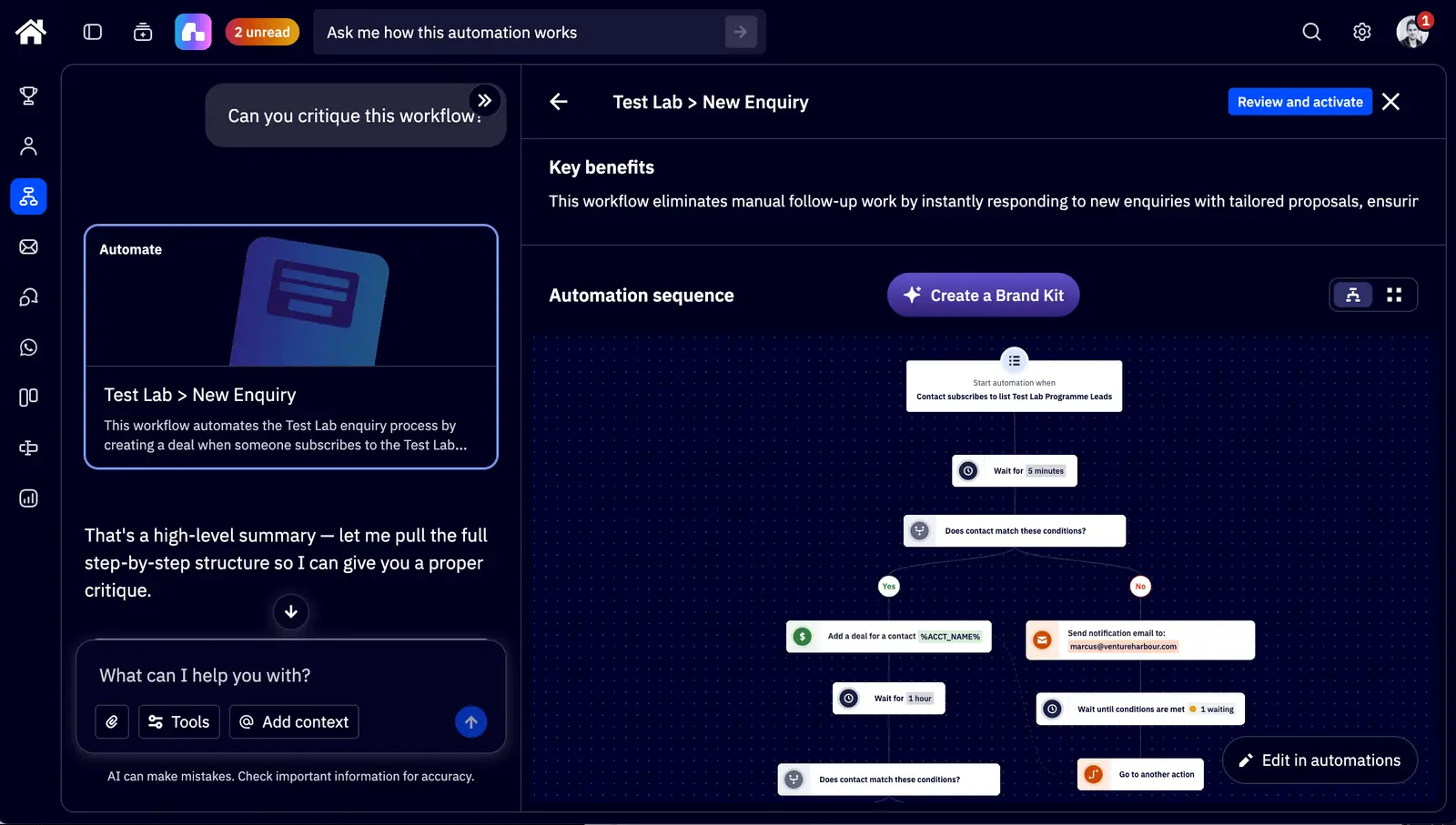
In our latest test, Marcus asked it to improve an onboarding sequence’s open rates, click-through rates and activation. It pulled a baseline, spotted an unfinished A/B test, flagged a high unsubscribe rate and noticed a missing preheader. That gave us a prioritised list of changes without manually working through every email report.
When asked to implement the fixes, it could add goal exits, a day-seven re-engagement branch and a 48-hour resend to non-openers. For larger teams analysing campaigns and maintaining dozens of sequences, that combination can save substantial time on diagnosis and routine changes. The reporting interface itself still feels dated compared with HubSpot.
Building from a brief also has limits. Claude, connected to the account, drafted a sensible 14-day activation sequence and plain-text emails, but the connector couldn’t build the automation itself. Active Intelligence’s separate email-building test ignored the requested one-column layout and single image (apparently one of each was too much to ask).
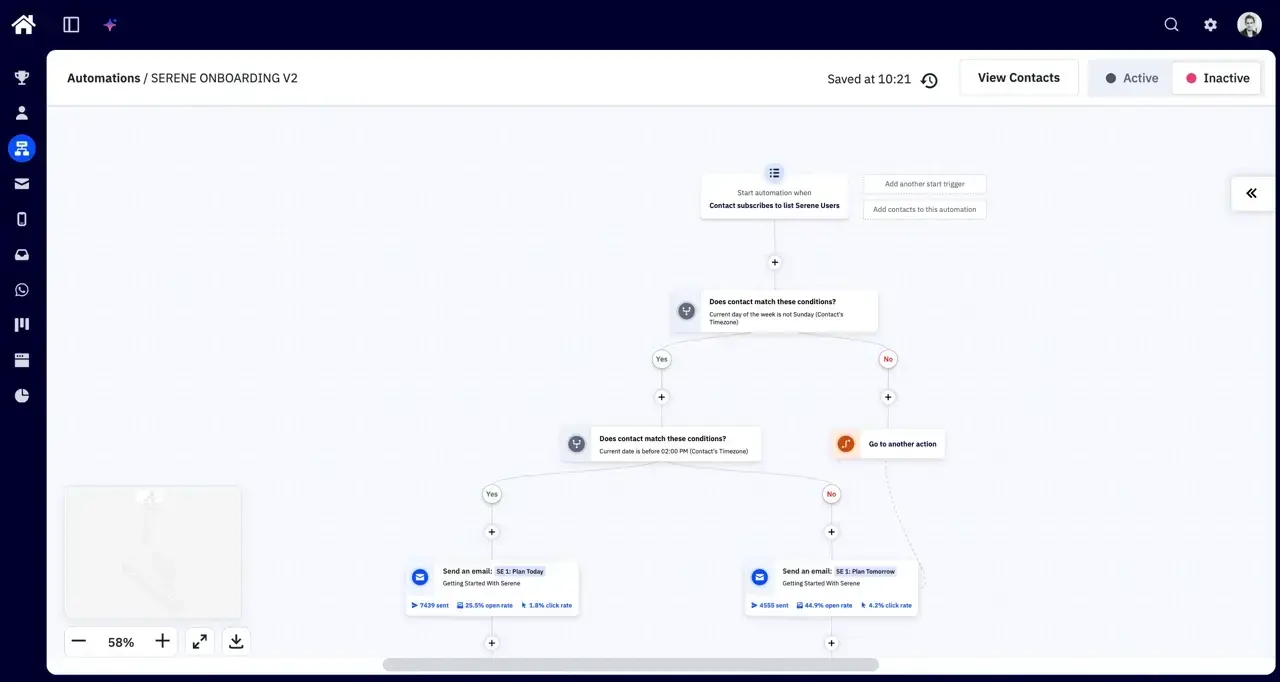
The visual builder gives your team a way to inspect those sequences and finish the work. Our Serene onboarding automation branches on the contact’s local day and time before choosing which welcome email to send. Your team still needs to check the conditions, timing and exits before activating a sequence.
For enterprises, we’d use ActiveCampaign as the marketing automation layer alongside the CRM the sales team already uses. That avoids replacing a working sales system, though someone still needs to own the integration and keep contact data consistent.
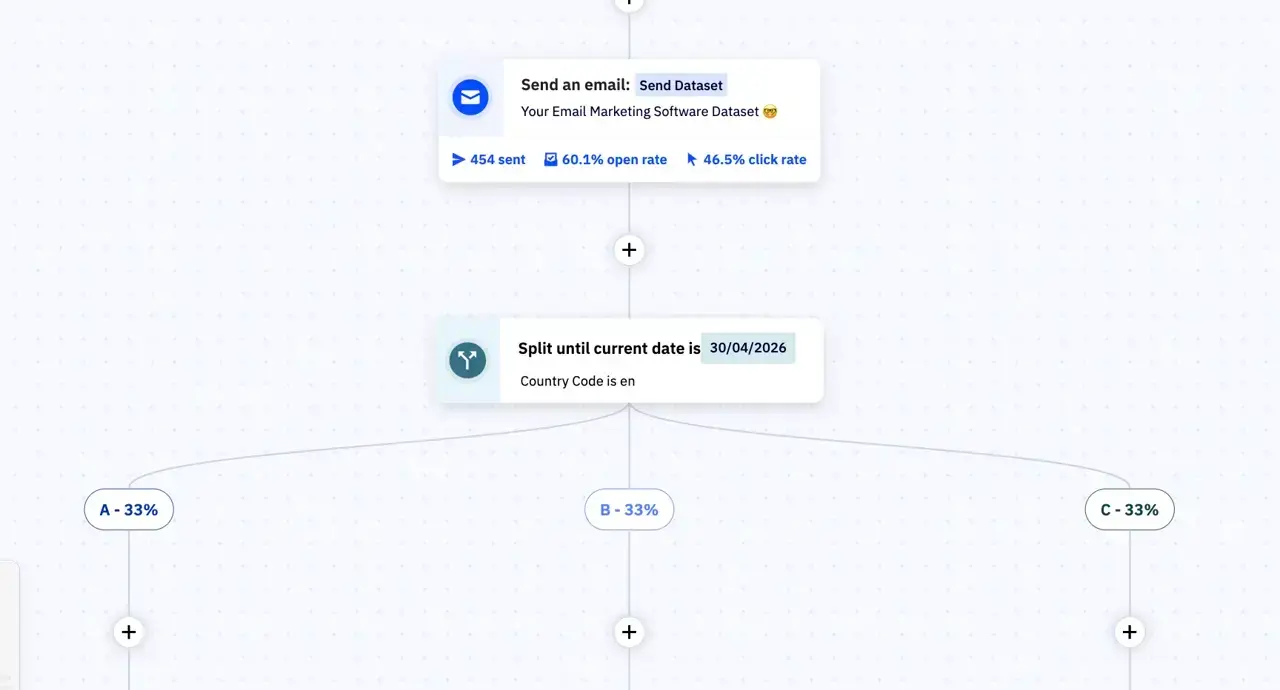
Split-testing entire automation paths is another reason we’d shortlist it. Your team can compare different email frequencies or timings across a sequence, rather than judging performance from a subject-line test alone.
The AI struggled here in our test. It couldn’t add the split actions itself, and after Marcus created a branch manually, it rebuilt the email instead of changing one element. A person still needs to define the hypothesis and check that the variants test it.
Pros and Cons
-
AI that uses account context. Builds segments, critiques sequences and suggests changes based on campaign performance.
-
Less manual automation work. In our test it added goal exits, a re-engagement branch and a non-opener resend.
-
Full-path split testing. Compare different timings and email sequences, beyond individual campaign variants.
-
Works alongside an existing CRM. A fit for teams that want to keep their sales system and improve marketing automation.
-
AI needs supervision. Email drafts ignored layout instructions, and its A/B variants changed too much to isolate a hypothesis.
-
The CRM is too basic for a large sales team. We’d pair it with a dedicated CRM for managing deals at scale.
-
Reporting looks dated. AI-assisted analysis helps, but the dashboards are less polished than HubSpot’s.
Is it the right enterprise email platform for you?
We’d shortlist ActiveCampaign Enterprise if your team spends substantial time building lifecycle sequences and analysing campaign results, and already has a CRM it wants to keep. Its AI can take on much of the preparation and diagnostic work, provided an experienced marketer owns the final checks.
If you need sales and marketing in one suite with closed-loop revenue attribution, we’d look at HubSpot first. ActiveCampaign’s AI doesn’t remove the work of connecting systems or designing a sound experiment.
02HubSpot Marketing Hub Enterprise
For B2B teams that need closed-loop attribution more than cheap sending.
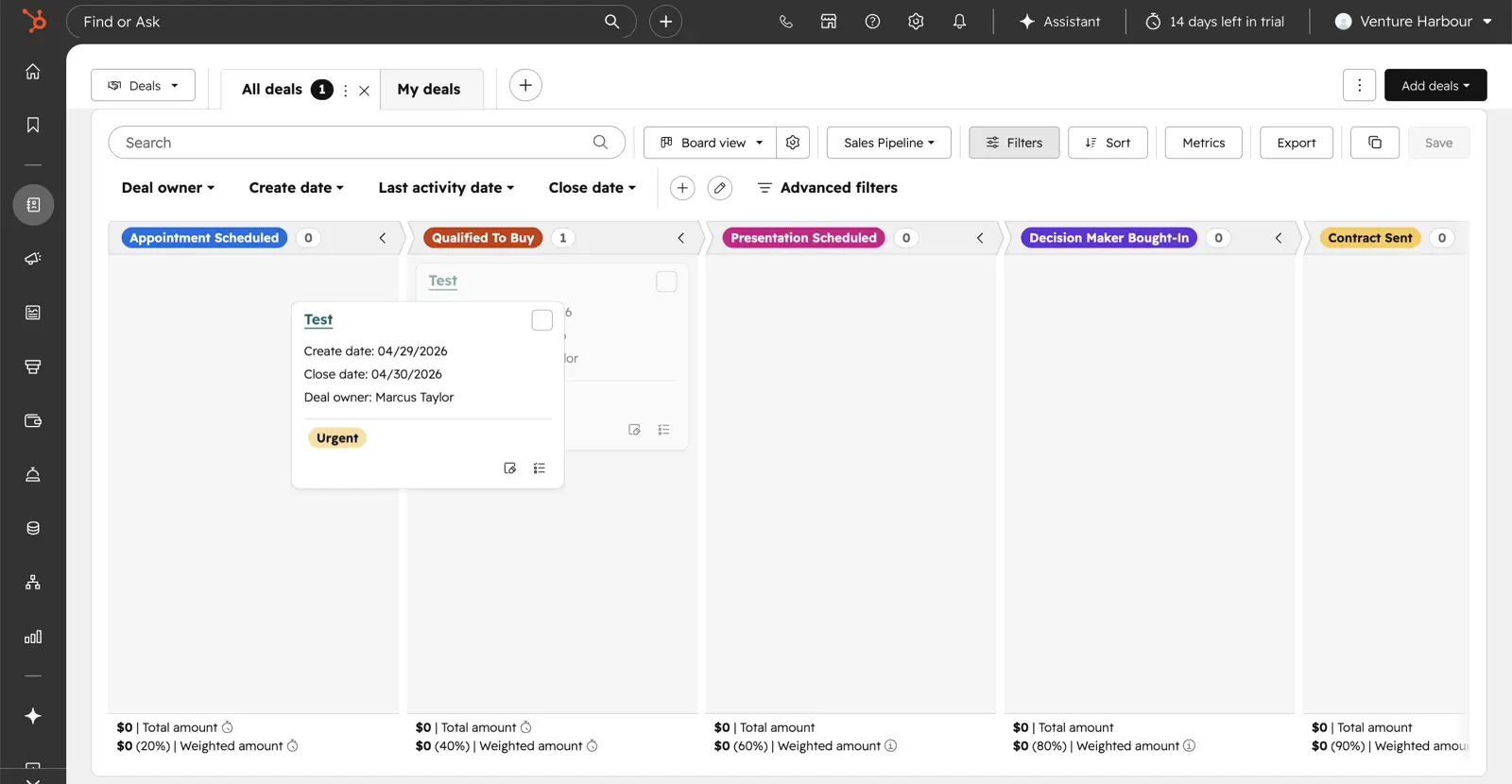
We’ve run HubSpot across two of our ventures since 2018. For B2B service companies that use revenue attribution to make decisions, this is the right pick. The CRM, marketing, sales and service tools sit natively together, so you can say “this email campaign generated $42,000 in pipeline” with the data to back it up.
The Spring 2026 Spotlight added native multi-touch revenue attribution to Marketing Hub Pro+, which closes one of the gaps that used to push enterprise teams towards Salesforce Marketing Cloud. Loop Marketing, campaign generation from a single brief across email, ads, landing pages and social, is the other recent addition worth the demo time.
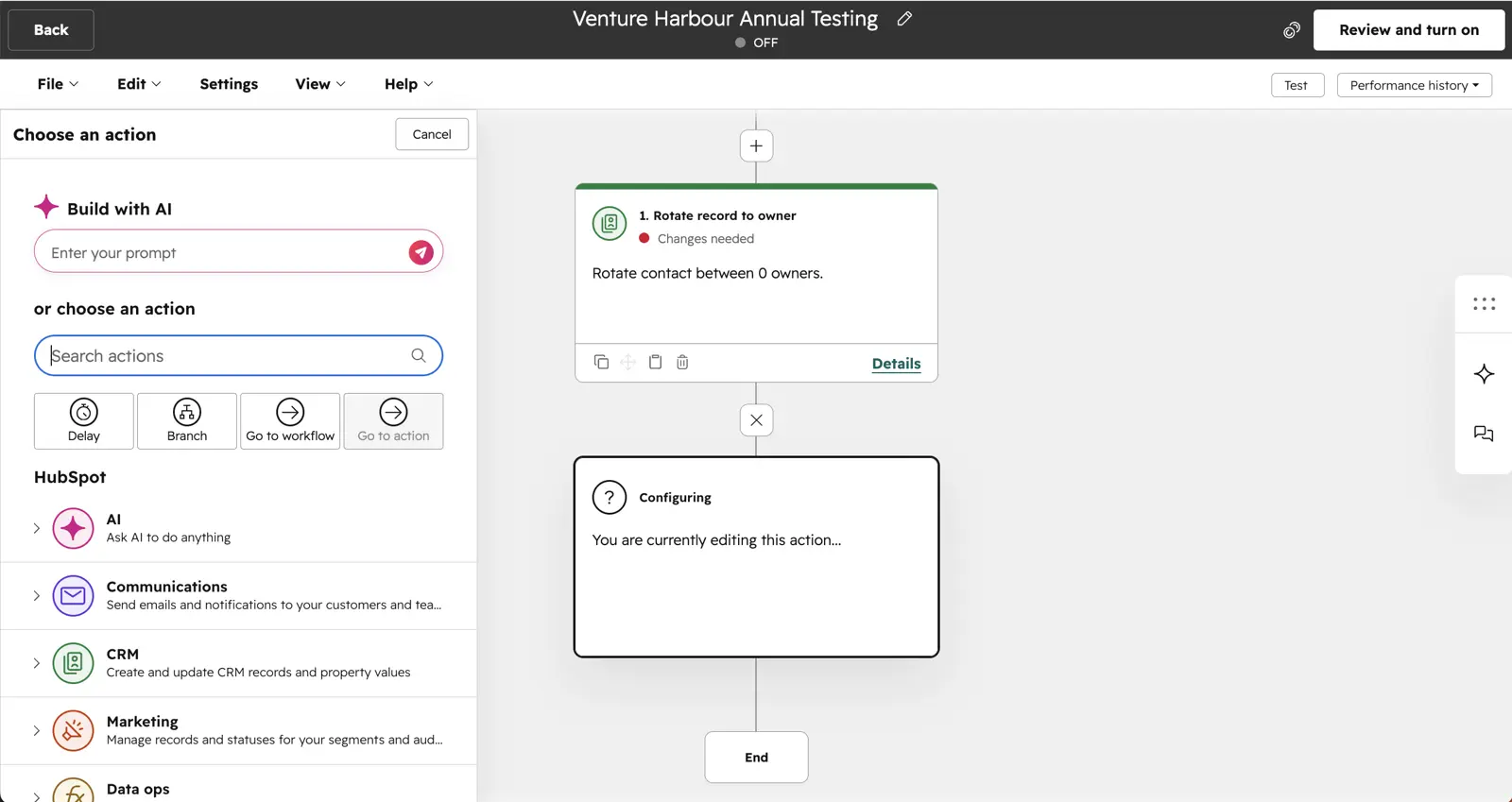
HubSpot bundles CRM, email, landing pages, blog, social, ads, forms, live chat, an AEO module (Answer Engine Optimisation, tracking your visibility in ChatGPT and Perplexity), and reporting. For B2B teams, I’d prioritise eliminating the integration tax between those tools over any individual feature comparison.
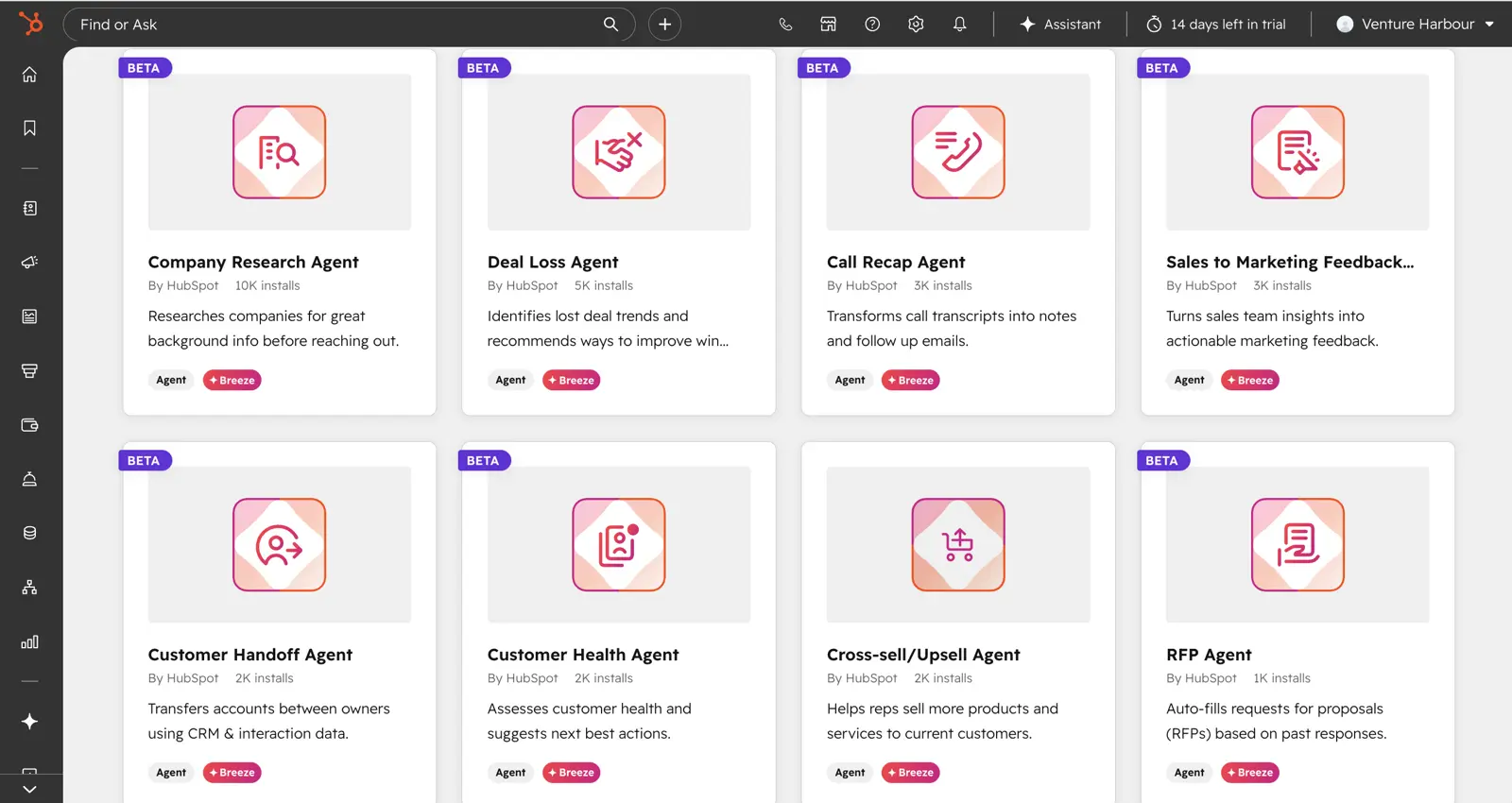
The Breeze AI suite (Customer Agent, Prospecting Agent, Data Agent and Copilot) moved to outcome-based pricing in April 2026, $0.50 per resolved customer conversation, $1.00 per qualified lead. For high-volume teams, that’s a better deal than the old per-contact model.
Beyond the features, what Enterprise buys you is the suite, the polish and the closed-loop attribution. HubSpot’s inbox placement on volume sending consistently lands behind ActiveCampaign and Brevo, and there’s no split-testing of full automation paths. Both are gaps worth knowing before you sign.
The structural costs are unforgiving: Professional starts at $890/mo with a $3,000 onboarding fee. Enterprise is $3,600/mo with a $7,000 onboarding fee.
Both lock you into a 12-month commitment with no early exit, and at 100K contacts Enterprise runs around $5,850/mo. Plan for the lock-in and the non-refundable onboarding before the first demo.
Pros and Cons
-
Closed-loop revenue attribution. Native CRM-to-email connection traces every closed deal back to the content, sequence and email that influenced it. Hard to beat at this price point for B2B.
-
Polished UX. The most polished marketing platform we’ve tested. Every product feels designed by the same hand.
-
Everything in one suite. CRM, email, landing pages, blog, social, ads, forms and AEO module, which eliminates the integration tax B2B teams pay everywhere else.
-
AI worth the demo. Loop Marketing, Breeze Customer Agent and Breeze Prospecting Agent are differentiated, particularly with the new outcome-based pricing.
-
The cost runway is brutal. $890/mo Pro to $3,600/mo Enterprise, plus $3,000–$7,000 mandatory onboarding fees, plus 12-month commitments with no early exit.
-
Deliverability is mid-pack on volume. Solid B2B sending, but consistently behind ActiveCampaign and Brevo on volume programmes.
-
Automation depth lags, with no split-testing of full automation paths and predictive lead scoring reserved for Enterprise.
-
You’ll likely need a HubSpot specialist. Add £80–150/hour for an in-house admin or agency partner. The all-in cost is rarely the sticker price.
Is HubSpot Marketing Hub Enterprise the right enterprise email platform for you?
B2B service companies doing $1M+ in revenue with sales cycles longer than 30 days, where closed-loop revenue attribution changes decisions. Enterprises that don’t already have a CRM and want one suite covering CRM, marketing, sales and service.
Marketing teams that need to be live in 4–8 weeks rather than 4–6 months. B2B organisations with budget and political appetite for a full HubSpot rollout (annual commitment, in-house specialist, 12-month minimum).
Enterprises that already run Salesforce or Microsoft Dynamics (running both creates duplicate data and political tension). High-volume eCommerce or transactional senders (look at Omnisend or Brevo).
Fortune 500 brands with regulated-industry compliance requirements (look at Salesforce Marketing Cloud). Anyone with budget pressure — for almost everyone, ActiveCampaign Enterprise gets you 80%+ of the same outcome at a fraction of the cost.
03Omnisend Pro
Best enterprise email marketing platform for eCommerce.
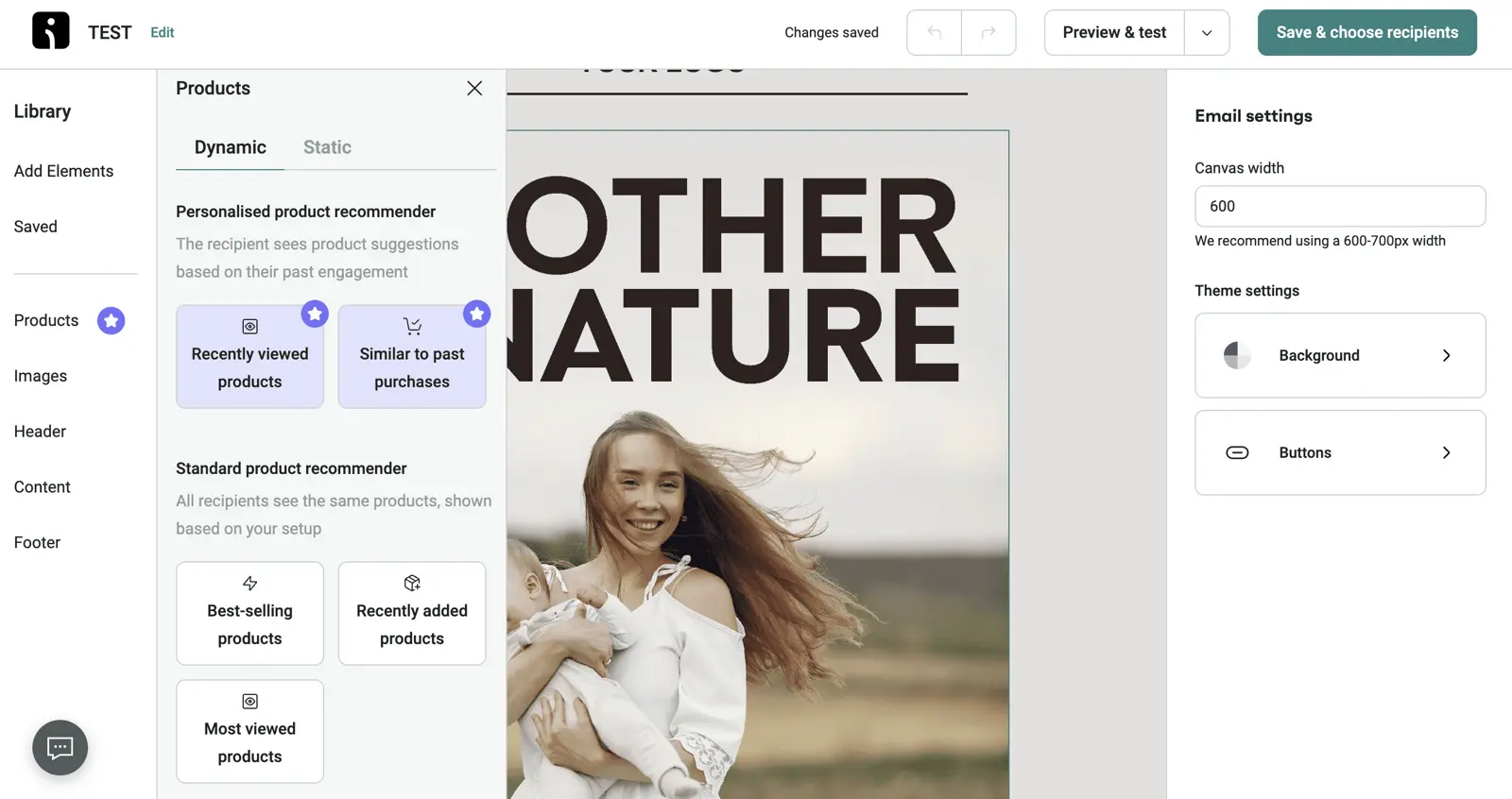
For enterprise eCommerce sitting below the Salesforce Marketing Cloud line, Omnisend Pro is the right pick. It starts at $59/mo, with custom quotes for stores above 150,000 active profiles.
Connect Shopify or BigCommerce and Omnisend pulls in your product inventory, customer list and order history automatically. Most stores are sending within a few hours rather than a few weeks. The revenue attribution is more granular than Klaviyo’s, the omnichannel automations are smoother, and at every contact tier it’s noticeably cheaper than Klaviyo for comparable features.
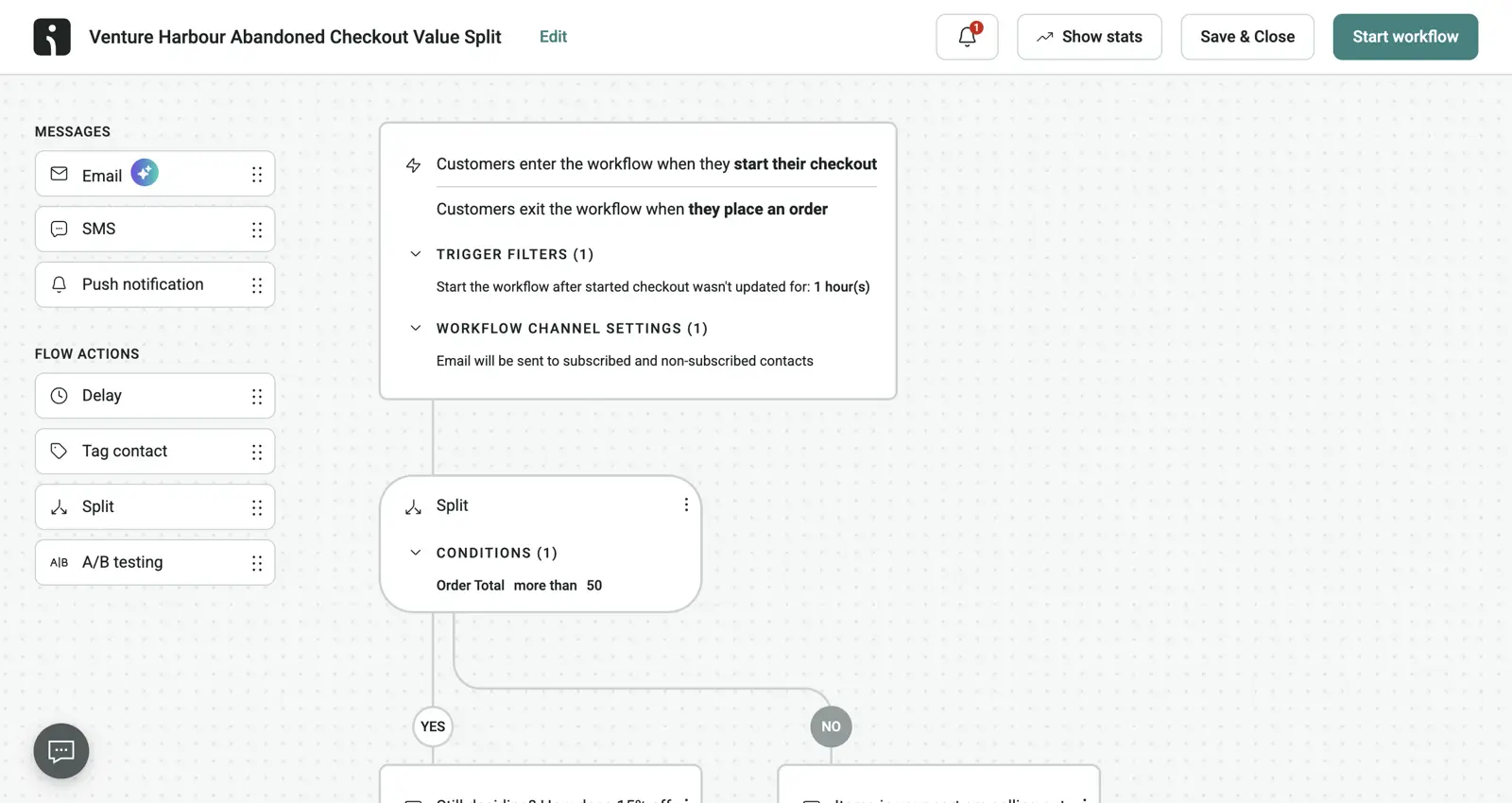
The standout is the omnichannel workflow builder. A single automation can send an email, wait 24 hours, then fire a push notification if it hasn’t been opened. It can then follow up with an SMS — all native, all on one canvas.
We’ve stitched this same logic together across separate tools and Zapier in the past. At enterprise volume, Omnisend’s native version is less buggy, faster to set up, and the timing behaves as specified.
The free done-for-you migration is the other reason to take Omnisend seriously at enterprise scale. This is Omnisend’s offer, not ours. The migration sprint is the biggest hidden cost when switching ESPs at enterprise contact counts.
Omnisend’s team handles list imports, automation rebuilds, template recreation and deliverability setup at no cost on every paid plan, Pro included. For a 250K-contact Klaviyo migration, that’s tens of thousands in agency fees you don’t pay.
The Pro plan adds unlimited emails, free global SMS credits equal to your monthly plan cost, advanced reporting, and an account expert option for larger lists. At 250K contacts Omnisend Pro is custom-quoted but typically lands well below Klaviyo’s enterprise tier, and the gap widens at 500K and beyond.
Omnisend is built for stores. If your enterprise sells products online, this is the right tool. If you’re B2B, a creator, or anything without a shopping cart, almost every feature will feel irrelevant.
Pros and Cons
-
Native omnichannel workflows. Email, SMS and web push in a single visual builder. Less buggy and faster to set up than stitching separate tools.
-
Revenue attribution per A/B variant. Tracks revenue back to the specific email, automation and A/B variant that influenced each sale. More granular than Klaviyo’s.
-
Free done-for-you migration on every paid plan. Omnisend’s offer, list imports, automation rebuilds, template recreation and deliverability setup at no cost. Removes the biggest barrier to switching.
-
Cheaper than Klaviyo at every contact tier. Comparable or better analytics, with SMS credits bundled into Pro rather than charged separately.
-
AI that pulls its weight. Trained on millions of real eCommerce campaigns, with a natural-language segment builder, send-time optimisation and Brand Assets AI for visual consistency.
-
Built for stores only. No B2B fit, no creator fit, no service-business fit. The whole feature set assumes products and orders.
-
Reporting customisation is mid-tier. Dashboards are clean but power analysts will want more flexibility than Omnisend currently offers.
-
Email send caps on Standard. Pro removes the cap with unlimited emails, but if you’re at enterprise scale on Standard, you’ll hit the ceiling.
Is Omnisend Pro the right enterprise email platform for you?
Enterprise eCommerce stores on Shopify, Shopify Plus, BigCommerce or WooCommerce. Stores doing $1M+ in annual revenue where revenue attribution per email matters.
Enterprise teams currently on Klaviyo who want comparable analytics at lower cost, particularly given the free done-for-you migration. Multi-channel commerce teams orchestrating email, SMS and push.
Non-eCommerce enterprises (B2B, SaaS, services, creators). Fortune 500 brands needing cross-channel orchestration across non-eCommerce channels (look at Salesforce Marketing Cloud or Adobe Campaign). Regulated industries with HIPAA or financial-services compliance requirements.
04Mailchimp
Test Lab Partner (Paid)Mailchimp is a member of our Test Lab Programme, which means we receive a fee to conduct hands-on testing of their platform. Learn more about our Test Lab Programme →Best enterprise email marketing platform for newsletter-led teams that value speed.
We tested Mailchimp across eight areas in September 2026, and it scored 34 out of 40. The email builder was the standout. We rebuilt an email campaign in eight minutes, faster than HubSpot, ActiveCampaign, Omnisend or Constant Contact managed in the same test.
Mailchimp Premium starts at $350/month and is the plan that makes most sense for larger teams. It adds phone and priority support, multivariate testing, predictive segmentation and personalised onboarding. The lower tiers are fine for basic sending, but Premium is where the support story starts to look credible for a bigger marketing team.
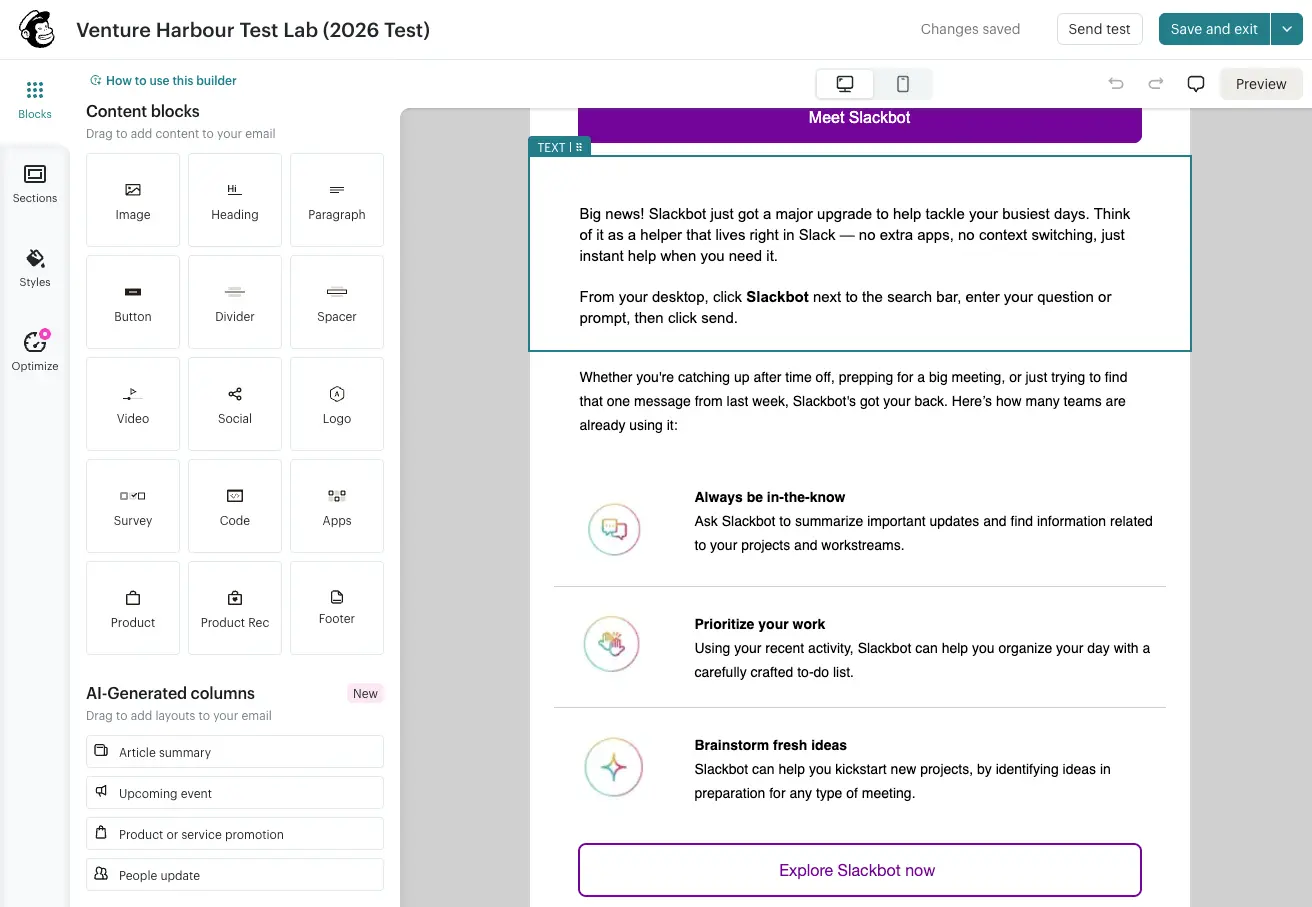
The reason to shortlist Mailchimp is usability. If your marketing team mainly sends newsletters, product announcements, event campaigns and simple nurture sequences, the platform gets out of the way. It suits teams whose bottleneck is campaign production rather than complex journey logic.
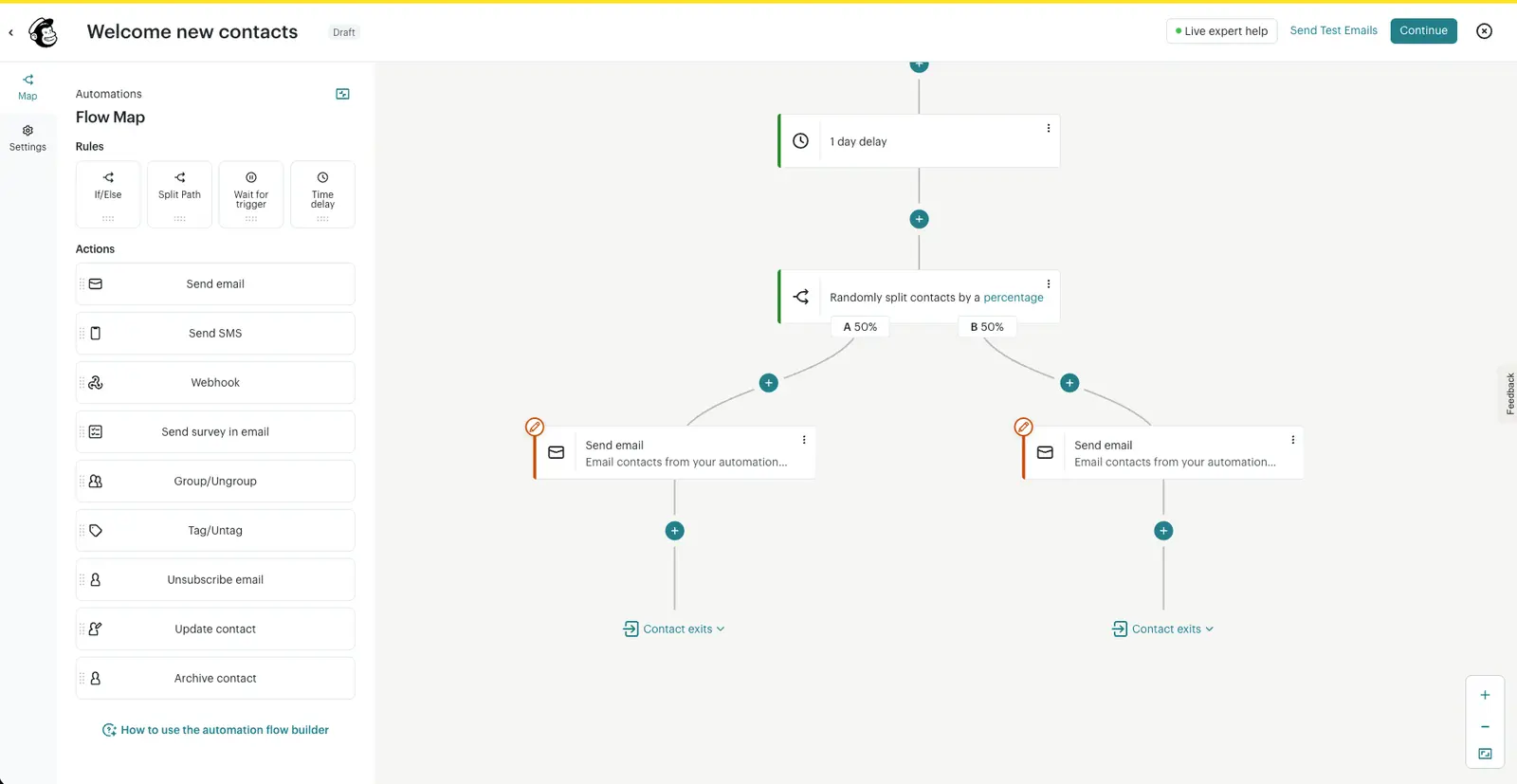
Mailchimp’s automation builder handled welcome sequences, delays, split paths and behavioural branches cleanly in our test, but it lacked the AI planning help and third-party app actions I would want for serious lifecycle marketing.
Mailchimp’s AI is useful inside the editor for copy, subject lines and content blocks. The Claude connector was more interesting than expected, because it turned a multi-channel campaign plan into editable Mailchimp drafts. The workflow still felt awkward, and the optimisation advice was generic.
That puts Mailchimp in a narrow but useful slot. It is the easiest platform here to hand to a non-technical marketer, while ActiveCampaign, HubSpot and Omnisend remain stronger for automation-led teams.
Pros and Cons
-
Fastest email builder in our testing. We rebuilt an email campaign in eight minutes, ahead of HubSpot, ActiveCampaign, Omnisend and Constant Contact.
-
Premium adds bigger-team support. Phone and priority support, multivariate testing, predictive segmentation and personalised onboarding make the plan more credible than the lower tiers.
-
Support was better than expected. A human chat agent gave a useful billing answer in eight minutes.
-
Strong default deliverability. The test campaign scored 9/10 after adjusting for test-account DMARC and crawler issues.
-
Automation depth is lighter than ActiveCampaign or HubSpot. Fine for welcome sequences and simple branches, weaker for CRM-driven lifecycle marketing.
-
AI feels early. Useful for block-level copy and subject lines, less useful for journey critique or campaign strategy.
-
Enterprise fit is narrow. Newsletter-led teams may love the calm interface, but complex B2B, regulated and eCommerce teams will outgrow it.
Is Mailchimp Premium the right enterprise email platform for you?
Newsletter-led marketing teams, publishers, event teams and larger small businesses that want polished campaigns without a long setup. Non-technical marketers who need to produce attractive emails quickly. Teams that value ease of use more than automation depth, and that can live with a lighter governance layer.
Open Mailchimp's WebsiteCRM-heavy B2B teams, sophisticated lifecycle marketers and regulated enterprises that need deeper audit controls or contractual data residency. eCommerce teams where SMS, push, revenue attribution and product data sit at the centre of automation. ActiveCampaign, HubSpot and Omnisend are stronger fits for those jobs.
05Brevo Enterprise
Best enterprise email marketing platform for transactional + marketing at high volume.
We started running Brevo for transactional email back in 2016, when it was still Sendinblue, and we’ve sent 640,199 emails through it since — order confirmations, password resets, OTPs, the unglamorous plumbing. Brevo Enterprise (custom pricing, volume-based) is what we’d put on a shortlist when transactional volume is the dominant requirement and marketing automation rides alongside.
The pricing model is the meaningful difference from everything else here: unlimited contacts on every plan, charges based on volume sent rather than contact count. For enterprises sitting on large dormant lists or for transactional-heavy senders, the maths works out cheaper.
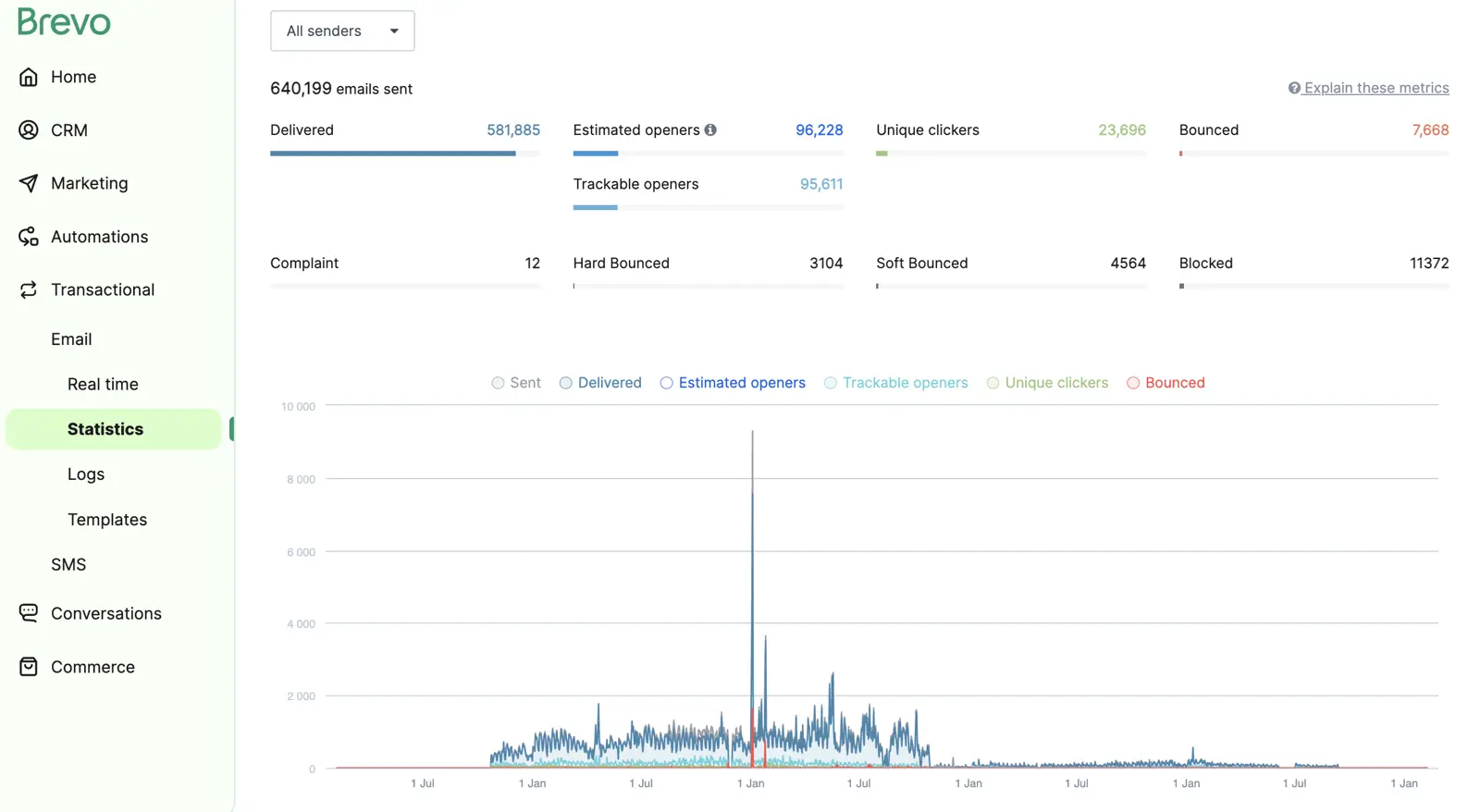
Brevo’s transactional infrastructure is solid because that’s what the company started life as — the marketing layer matured later, on top of that foundation. Multi-channel sending (email, SMS, WhatsApp) is bundled in, so transactional traffic can run across those channels in one platform.
Marketing automation is where it falls behind the leaders. The visual workflow builder is functional but a step behind ActiveCampaign’s, and there’s no split-testing of full automation paths. CRM features are thin, no lead scoring, segmentation that doesn’t approach HubSpot or ActiveCampaign. If marketing automation is your primary use case, this is the wrong platform.
Brevo Enterprise tends to fit best as a second tool, paired with something else. We run it alongside ActiveCampaign, ActiveCampaign handling marketing automation, Brevo handling transactional volume. A lot of enterprise teams running both end up with the same split.
Pros and Cons
-
Email-volume pricing. Unlimited contacts on every plan. Structurally cheaper for enterprises with large lists and low send frequency.
-
Transactional infrastructure is solid. Originally built for transactional use; the marketing layer sits on top of that foundation.
-
Multi-channel native. Email, SMS and WhatsApp in one platform, useful for transactional-heavy enterprises.
-
No annual lock-in or mandatory onboarding fees at most tiers.
-
Marketing automation depth is mid-tier. Functional but well behind ActiveCampaign and HubSpot. No split-testing of full automation paths.
-
CRM features are minimal. No real lead scoring, no segmentation depth at the level enterprise marketing teams expect.
-
Reporting is bland. The data is there; the analysis tooling isn’t on par with enterprise peers.
-
Enterprise positioning is thinner than SFMC, Adobe Campaign or HubSpot. Procurement teams often prefer a more enterprise-branded vendor.
Is Brevo Enterprise the right enterprise email platform for you?
Enterprises where transactional email volume is the dominant requirement (eCommerce, SaaS, fintech, marketplaces). Organisations with large dormant contact lists where per-contact pricing is structurally expensive. Enterprises wanting a strong second tool to pair with ActiveCampaign or HubSpot for transactional sending.
Enterprises whose primary need is marketing automation depth (look at ActiveCampaign Enterprise). B2B service companies wanting closed-loop revenue attribution (look at HubSpot Enterprise). Fortune 500 brands needing cross-channel orchestration (look at SFMC or Adobe Campaign).
06Salesforce Marketing Cloud
Best enterprise email marketing platform for regulated industries.
Salesforce Marketing Cloud doesn’t publish enterprise pricing. The low end starts around $1,250/mo and rises sharply once implementation partners are factored in; expect first-year all-in costs north of $50,000. SFMC makes sense for regulated enterprises and for any organisation already running Sales Cloud or Service Cloud as the system of record. Outside those scenarios, it’s overkill.
Journey Builder is the standout — cross-cloud orchestration across email, mobile, advertising, web and in-app. It runs on a unified customer data model that pulls from Sales Cloud, Service Cloud, Data Cloud and external warehouses. Audience Builder takes segmentation depth a step beyond what mid-market platforms can offer. Einstein AI sits across the suite; with enough data behind it, the recommendations are useful at scale.
It also enforces a particular way of working, for better and worse. Teams that come from HubSpot or ActiveCampaign find SFMC slow, technical and aggressively non-self-serve. Almost every SFMC enterprise rollout we’ve seen has a dedicated marketing ops function (typically 3+ people) plus an external implementation partner on retainer.
On the infrastructure side, SFMC is excellent — SLA-backed delivery, dedicated IPs by default at enterprise tiers, and full data residency in named regions. UK, EU, US and APAC are all covered. For financial services, healthcare and life sciences, that compliance posture is the deciding factor. Nothing else on this list satisfies an FCA or HIPAA audit as comfortably.
Pros and Cons
-
Cross-channel orchestration at Fortune 500 scale. Journey Builder is the strongest cross-channel automation tool here, particularly when paired with the wider Salesforce data model.
-
Native to Salesforce CRM. Same data model, no integration layer. The default choice when Sales Cloud or Service Cloud is already in place.
-
Compliance posture is best-in-class. FedRAMP, HIPAA-aligned, multi-region data residency contracts, full audit trails. Clears the procurement bar that nothing else here can.
-
Einstein AI scales with your data. Learns from your customer base rather than generic models. Particularly strong at content recommendation and journey optimisation.
-
Implementation is a multi-quarter project. 3–6 months minimum, almost always with an external partner. Six-figure implementation costs are normal.
-
Slow and technical relative to peers. Marketers used to HubSpot or ActiveCampaign find SFMC frustratingly non-self-serve. Most rollouts need a dedicated marketing ops team.
-
Total cost of ownership is brutal. Platform fee, partner fees, in-house admin, ongoing consultancy. The headline price is rarely close to what you’ll spend.
-
Overkill for most B2B mid-market teams. If your contact list is under 250K and you don’t already run Sales Cloud, you almost certainly want HubSpot or ActiveCampaign instead.
Is Salesforce Marketing Cloud the right enterprise email platform for you?
Fortune 500 enterprises and regulated-industry organisations (financial services, healthcare, life sciences, government). Companies already running Sales Cloud or Service Cloud as the system of record. Enterprises with multi-channel orchestration requirements that span email, SMS, push, advertising and web. Marketing teams with the budget and headcount to run a dedicated marketing ops function plus an external partner relationship.
Open Salesforce Marketing Cloud's WebsiteMid-market enterprises (under 250K contacts) without an existing Salesforce footprint. Marketing teams that need to be live within weeks. B2B service companies doing under $10M in revenue (the implementation cost alone will eat your annual marketing budget). Anyone whose primary need is email automation rather than cross-channel orchestration.
07Adobe Campaign
Best enterprise email marketing platform for Fortune 500 brands inside Adobe Experience Cloud.
Adobe Campaign is priced custom, typically negotiated as part of a wider Adobe Experience Cloud contract. It’s a natural fit when AEM, Adobe Analytics and Adobe Target are already in the stack. Campaign slots in as the marketing execution layer and gives you finer-grained control over cross-channel campaigns than anything else here. Take it on its own, without the rest of Adobe’s suite, and the implementation cost rarely justifies the rollout.
Where it pulls ahead of SFMC is in campaign architecture for technical marketers. The control surface is more granular: workflows can branch on customer attributes, segment intersections, content rules and channel availability in ways that need code (or close to it) on other platforms. Implementation runs 4–9 months with a partner. The customisation depth is the reason Fortune 500 brands choose it.
Where it falls behind SFMC is self-serve usability. Adobe Campaign is built around campaign architects. Most enterprise teams running it have a dedicated technical marketing function plus an Adobe partner on retainer.
For most readers, Adobe Campaign won’t be the right answer. At the top of the market, global brands orchestrate campaigns across email, push, in-app and web at 10M+ customer scale inside Adobe Experience Cloud. Adobe Campaign handles that cleanly.
Pros and Cons
-
Cross-channel orchestration at the very top of the market. Stronger than SFMC for technical campaign architects who want fine-grained control over delivery, segmentation and content rules.
-
Native to Adobe Experience Cloud. Tight integration with AEM, Adobe Analytics, Adobe Target and Customer Journey Analytics.
-
Deep customisation. Workflow branching, segmentation logic, content rules, the platform doesn’t push you toward a particular way of working.
-
Compliance and global delivery. Multi-region data residency, SLA-backed delivery, dedicated IPs by default. Built to clear Fortune 500 procurement.
-
Implementation is a 4–9 month project minimum. Often longer if integrating with the wider Adobe stack from scratch.
-
Campaign architects are the primary users. Self-serve usability is poor relative to HubSpot, ActiveCampaign or even SFMC. A dedicated technical marketing team is effectively required.
-
Total cost of ownership is the highest in this comparison. Platform fee + partner fees + dedicated technical marketing function. Realistic first-year all-in costs frequently exceed $500,000.
-
Wrong tool if you don’t already run Adobe Experience Cloud. Adobe Campaign on its own, without AEM, Analytics or Target, rarely justifies the rollout cost.
Is Adobe Campaign the right enterprise email platform for you?
Fortune 500 brands already running Adobe Experience Cloud (AEM, Analytics, Target, Customer Journey Analytics). Global organisations orchestrating brand campaigns across email, push, in-app, advertising and web at 10M+ customer scale. Enterprises with a dedicated technical marketing function and an existing Adobe partner relationship.
Open Adobe Campaign's WebsiteMid-market enterprises without an existing Adobe footprint. B2B service companies (HubSpot or ActiveCampaign Enterprise will deliver more value with far less implementation pain). Marketing teams that need to be self-serve. Anyone evaluating Adobe Campaign as “an enterprise email tool” rather than “the cross-channel orchestration layer of our existing Adobe stack” is asking the wrong question.
08Constant Contact (Lead Gen + CRM)
Best enterprise email marketing platform for mid-market simplicity.
Constant Contact’s Lead Gen + CRM plan (formerly SharpSpring) runs around $449/mo and sits on the lighter end of this list. For a 50–500 person organisation that wants email, automation, lead scoring and a basic CRM in one bundle, without 12-month lock-ins, onboarding fees or six-figure implementation projects, it’s a reasonable fit.
The strength is speed-to-live. Implementation typically runs 1–2 weeks. The interface is approachable for marketers without specialist training, and automation, lead scoring and CRM functionality are present at the Lead Gen + CRM tier. They are shallower than ActiveCampaign or HubSpot, and enough to run a B2B marketing programme without needing a separate tool.
The limit is scale. Above ~500K contacts, or for teams that need cross-channel orchestration, sophisticated split-testing or the integration depth ActiveCampaign and HubSpot offer, this isn’t the right platform. The brand leans heavily into small-business marketing too, which shows up in the product (templates, support tone, default settings).
For mid-market enterprises that prioritise speed-to-live and operational simplicity over feature depth, the Lead Gen + CRM plan is a reasonable shortlist entry. For anything more demanding, ActiveCampaign Enterprise is the better choice at similar pricing.
Pros and Cons
-
Fast implementation. Typically 1–2 weeks. No mandatory onboarding fee, no annual lock-in.
-
Email + automation + lead scoring + CRM in one plan. Lead Gen + CRM tier covers most mid-market enterprise needs without a separate stack.
-
Approachable for marketing teams without specialist headcount. Lower learning curve than ActiveCampaign or HubSpot.
-
Predictable pricing. Around $449/mo for Lead Gen + CRM, scaling reasonably with contact volume.
-
Not a Fortune 500 fit. No genuine cross-channel orchestration, weaker compliance posture than SFMC or Adobe Campaign, brand positioning skews small-business.
-
Automation depth lags ActiveCampaign and HubSpot. Sufficient for mid-market B2B marketing; insufficient for sophisticated lifecycle programmes.
-
Reporting is functional but unremarkable. Solid for basic campaign analytics, less suited to enterprise marketing analysts.
-
Integration ecosystem is narrower. Smaller integration directory than ActiveCampaign’s 1,000+ or HubSpot’s app marketplace.
Is Constant Contact (Lead Gen + CRM) the right enterprise email platform for you?
Mid-market enterprises (50–500 employees) that want email, automation, lead scoring and CRM in one plan without enterprise-tier rollout pain. B2B teams prioritising speed-to-live over feature depth. Organisations that have rejected HubSpot Enterprise on cost and ActiveCampaign Enterprise on complexity.
Open Constant Contact (Lead Gen + CRM)'s WebsiteFortune 500 brands and regulated industries. Enterprise eCommerce (look at Omnisend). Mid-market enterprises with sophisticated lifecycle programmes (ActiveCampaign Enterprise will deliver more value at similar cost). Teams above ~500K contacts.
Enterprise pricing comparison
Sticker prices rarely match what enterprises end up paying, but they’re a useful starting point for procurement.
“Custom” means the vendor doesn’t publish enterprise pricing — expect to negotiate.
| Platform | 50K contacts | 250K contacts | 1M contacts | Onboarding | Annual lock-in |
|---|---|---|---|---|---|
| ActiveCampaign Enterprise | ~$1,169/mo | Custom | Custom | Included | Annual |
| HubSpot Marketing Hub Enterprise | ~$5,000–5,500/mo | ~$12,000+/mo | Custom | $7,000 | 12 months, no early exit |
| Mailchimp Premium | Custom at enterprise volume | Custom | Custom | Personalised on Premium | Monthly/annual |
| Salesforce Marketing Cloud | Custom (~$3,750/mo+) | Custom (~$15,000+/mo) | Custom (~$50,000+/mo) | $50k–250k typical | Annual+ |
| Adobe Campaign | Custom | Custom | Custom | Six-figure typical | Multi-year |
| Omnisend Pro | Custom (150K+ band) | Custom | Custom | Free done-for-you migration | Monthly |
| Constant Contact (Lead Gen + CRM) | ~$449/mo | Custom | Not recommended | Included | Monthly/annual |
| Brevo Enterprise | Custom (volume-based) | Custom | Custom | Custom | Annual |
A few things to know before signing:
- HubSpot: Marketing-contact pricing is in 1,000-contact increments. Going one contact over auto-bumps your tier. Plan list growth around the increments.
- Salesforce Marketing Cloud and Adobe Campaign: Sticker prices rarely include implementation. Add a partner fee that frequently exceeds the platform fee in year one.
- ActiveCampaign Enterprise: Pricing scales more linearly than HubSpot Enterprise. At 50K contacts the gap is roughly 4× — at 250K it’s still 4×. HubSpot’s flatter curve only kicks in at 100K+ contacts.
- Mailchimp Premium: Pricing starts lower, but the fit is narrower. It makes sense when campaign production speed matters more than advanced automation, governance or CRM depth.
- Omnisend Pro: Done-for-you migration is free. That’s Omnisend’s offer, not ours. Worth taking seriously when comparing total switching costs from Klaviyo at 250K+ contacts.
- Brevo: Its email-volume model wins for high-list, low-frequency enterprises. It loses for high-frequency programmes. Model your actual send volume before signing.
Best by enterprise type
Best for enterprise eCommerce
Winner: Omnisend Pro.
For enterprise eCommerce stores on Shopify Plus, BigCommerce or WooCommerce, Omnisend Pro is the right call.
Native omnichannel automation (email, SMS, push) sits in one workflow. Revenue attribution traces each sale back to the specific A/B variant that drove it. Pricing lands well below Klaviyo at every contact tier, particularly at 250K+ contacts where the gap widens.
The free done-for-you migration is included on every paid plan. This removes tens of thousands in agency fees if you're considering a switch from Klaviyo.
Best for enterprise B2B (CRM-led)
Winner: HubSpot Marketing Hub Enterprise.
For B2B service companies that use revenue attribution to make decisions, and that don't already have a CRM in place, HubSpot Marketing Hub Enterprise is the natural fit.
You get the native CRM-to-email connection, plus one suite covering CRM, marketing, sales and service. The closed-loop attribution lets you walk into a board meeting and say "this campaign generated £X in pipeline" with confidence.
The structural costs are real: $3,600/mo plus $7,000 onboarding plus a 12-month commitment. For B2B teams under $1M in revenue it's hard to justify. Above that line, where attribution changes decisions, the bill is defensible.
Best for enterprise SaaS (lifecycle)
Winner: ActiveCampaign Enterprise.
For enterprise SaaS running lifecycle marketing, onboarding sequences, trial-to-paid conversion, expansion campaigns and churn reactivation, ActiveCampaign Enterprise is what we'd shortlist.
Pushing app event data into ActiveCampaign over the API and triggering nurture sequences just works. The visual automation builder makes the logic legible to non-engineers.
Split-testing of entire automation paths lets you A/B test "5 emails over a week vs 10 over a month" inside a single workflow.
Pair ActiveCampaign Enterprise with whichever CRM your sales team already runs. At a fraction of HubSpot Enterprise's cost, it's the SaaS lifecycle setup we'd back.
Best for Fortune 500 / global brands
Winner: ActiveCampaign Enterprise on top of your existing CRM.
The instinct at Fortune 500 scale is to default to Adobe Campaign or Salesforce Marketing Cloud, and there are scenarios where that's the right call.
For most global brands, though, the pragmatic answer is ActiveCampaign Enterprise as the marketing execution layer on top of your existing CRM.
Salesforce, Microsoft Dynamics or HubSpot CRM keeps doing what it does well. You get a marketing automation platform that's mature, SOC 2 certified, supports SSO and dedicated IPs, and costs a fraction of the alternatives.
Adobe Campaign or SFMC can justify the bill for deep cross-channel orchestration across the wider Adobe Experience Cloud stack, or compliance requirements that contractually need named-region data residency. Outside those, ActiveCampaign Enterprise is the better trade.
Best for financial services / regulated industries
Winner: ActiveCampaign Enterprise.
The default answer for regulated industries is Salesforce Marketing Cloud, and SFMC does belong on the shortlist for organisations with the most demanding compliance requirements (HIPAA, FedRAMP, contractually named data residency).
For most regulated enterprises, though, the practical pick is ActiveCampaign Enterprise. SOC 2 Type II, SSO, dedicated IPs, role-based permissions and audit trails are all there. It clears the procurement questionnaire most regulated organisations run, at a fraction of the implementation cost and time.
The reason ActiveCampaign Enterprise wins versus SFMC here: it sits on top of whichever CRM you've already standardised on, typically Salesforce in this segment. You don't end up duplicating the customer record or paying twice.
SFMC remains the right pick when the contractual compliance requirements demand it. That bar is higher than most procurement teams initially assume.
Best for enterprise media / publishers
Winner: ActiveCampaign Enterprise.
For enterprise media companies and publishers running multi-newsletter operations, vertical segmentation, lead-magnet funnels and paid memberships, ActiveCampaign Enterprise covers the use case best.
Site tracking ties article visits to specific subscriber profiles. Segmentation lets you move readers from a broad newsletter into vertical-specific lists based on what they read. The visual automation builder handles the lead-magnet-to-membership funnels publishers depend on.
Pair it with whichever subscription billing platform you already use — Stripe, Memberful or Substack Pro — via the native integrations.
Best for transactional-heavy enterprises
Winner: Brevo Enterprise.
For enterprises where transactional email volume is the dominant requirement — order confirmations, OTPs, password resets, account notifications, marketplace messages — Brevo Enterprise is the right tool.
Email-volume pricing means unlimited contacts, with charges based on what you send rather than the size of your dormant list.
We've sent 640,199 emails through Brevo since 2016, the bulk of it transactional. The infrastructure has held up.
Most enterprises in this category run Brevo alongside a stronger marketing automation tool: Brevo for transactional, ActiveCampaign or HubSpot for marketing. A lot of enterprise teams using both end up with the same split.
Deliverability at enterprise scale
At enterprise volume, particularly above 250K active sends per month, small differences in inbox placement compound into real revenue. Here’s how the eight platforms compare across independent testing, vendor studies and our own sending data.
ActiveCampaign Enterprise consistently lands in the top tier. ActiveCampaign reports a 94.2% inbox placement rate in independent testing against an industry average of ~83%. Across our own portfolio accounts we see a 99.4% deliverability rate with a 39.62% account-wide open rate. Dedicated IPs are included on Enterprise, with proactive list-hygiene tooling and a guided SPF/DKIM/DMARC wizard. If you don’t have a dedicated deliverability function in-house, this is the strongest pick on the list.
HubSpot Marketing Hub Enterprise sits mid-pack on volume sending. Across 8 years of HubSpot use across two ventures, inbox placement has consistently landed behind ActiveCampaign and Brevo on volume programmes. The infrastructure itself is solid, guided authentication, automatic hard-bounce suppression, list-health monitoring, dedicated IPs available on Enterprise (or as a $300/mo add-on on Pro). For B2B programmes that authenticate properly and maintain list hygiene, deliverability is fine. For high-volume eCommerce or transactional senders, the gap to ActiveCampaign and Brevo shows up.
Salesforce Marketing Cloud and Adobe Campaign both default to dedicated IPs at enterprise tiers and offer SLA-backed delivery commitments. For Fortune 500 brands and regulated industries, that contractual posture matters more than the absolute inbox-placement numbers, and once IPs are warmed, both platforms perform on a par with ActiveCampaign in independent testing.
Omnisend Pro performs well in independent testing. The Pro tier includes a dedicated deliverability expert, which is a real operational advantage at enterprise eCommerce scale, most Omnisend deliverability problems trace back to content choices (spammy subject lines, sending to disengaged segments) rather than the platform, and having a named person flag those before they hurt domain reputation pays for itself fast.
Mailchimp Premium did well in our September 2026 deliverability test. A default campaign scored 9/10 in Mail Tester after adjusting for my missing DMARC policy and a crawler-blocked Google Fonts link. The caveat is the same one we saw in the full review: strong defaults cannot rescue poor list hygiene or unwanted email.
Brevo Enterprise is transactional-grade. Across 640,199 emails sent since 2016, we’ve not had a serious deliverability incident.
Constant Contact is solid for mid-volume sending but isn’t optimised for the very high-volume programmes that ActiveCampaign, Brevo and SFMC handle natively.
At enterprise scale, deliverability is a platform infrastructure question plus a list hygiene question plus a content question. All eight platforms above clear the basic bar. The differences show up past 1M sends per month, which is where ActiveCampaign, SFMC, Adobe Campaign and Brevo pull ahead.
What you’re really paying for at enterprise
At every enterprise tier, the platform fee is a fraction of what you spend to make email marketing work. Implementation partners, in-house specialists, integration projects and internal time on the rollout are often larger than the platform itself. Salesforce Marketing Cloud and Adobe Campaign price them in explicitly. HubSpot embeds them in mandatory onboarding fees and 12-month commitments. ActiveCampaign, Omnisend and Mailchimp keep them lower, though Mailchimp gives up automation depth.
The cheapest enterprise email platform is rarely the one with the lowest sticker price. It is the one whose total cost of ownership, platform plus people plus integrations plus rollout time, matches your organisation. For most readers of this page, that’s ActiveCampaign Enterprise. B2B service companies that need attribution as the deciding factor land at HubSpot Enterprise. Newsletter-led teams that value campaign speed can shortlist Mailchimp Premium. Fortune 500 brands and regulated industries with contractual compliance requirements end up at Salesforce Marketing Cloud or Adobe Campaign. Enterprise eCommerce stays with Omnisend Pro.