


No doubt you’ve noticed the drastic increase in live chat widgets on websites over the past few years. This has coincided with the rise of chatbots - a new spin on the live chat concept that capitalises on the rise of instant messaging apps and social media.
The question is: does this technology really work or is it just another fad?
Well, it turns out 69% of consumers prefer talking to chatbots for quick communication with brands, as opposed to calling them directly or sending an email.
This makes sense when being put on hold or waiting for someone to read and reply to your email seems out of touch with today’s fast-paced world.
It seems businesses understand the demand for bots, too According to research from Oracle, 80% of businesses plan to launch a chatbot of some kind by 2020. While separate research from Juniper predicts that chatbots are going to save businesses $8 billion in costs by 2020.
Automating lead generation with bots
The real beauty of chatbots and live chat widgets is they’re 100% automated. So, once you’ve set them up, the technology will keep bringing in the leads, no matter how much traffic you throw at them - and you don’t have anyone at the helm to operate them either.
That all sounds great.
Of course, it takes a bit more than slapping widgets all over your website to get results. You need to have a strategy in place to pinpoint those moments where bots can be useful to the user and understand the kind of friction you might be adding in certain situations.
To give you a better idea of how bots can generate valuable leads by enhancing the experience on your site, here are five strategies you can try out for yourself.
01Offer help to users who appear lost
The most common place you’ll see live chat widgets is on a company’s homepage - or possibly every site on their page by default.
Typically, these trigger as soon as the page loads or after a short delay.
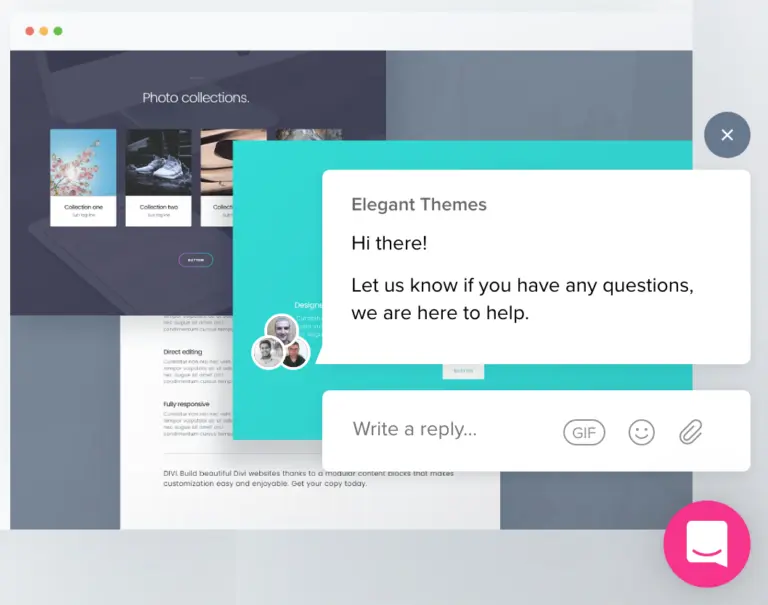
The problem I normally find is they tend to pop up too quickly while I’m still seeing what the page has to offer. Elegant Themes has a longer delay on its chat widget than most and think this improves the overall experience.
Personally, I would have an even longer delay for first-time visitors to give them a chance to take everything in. If they don’t click through to anything after a certain amount of time, this is the perfect moment to trigger the widget.
With some platforms, you can also trigger them to pop up when a user looks like they’re about to leave your site.
02Engage users when they want to leave your site
You’ve seen exit-intent pop-ups and you’ve probably seen exit-intent web forms. Well, some bot platforms, such as Tido, allow you to set up exit-intent chat experiences that trigger when a user looks like they’re about to leave.
Now, this could be when a user is about to leave your homepage or it could be when a potential customer is about to abandon a cart full of products.
Tidio helps you reduce cart abandonment.
Capturing a lead at this stage could make the difference between losing the sale forever and getting them back to place an order - now or in the near future.
03Collect leads out of hours
The internet never sleeps and people can engage with brands at anytime they want, anywhere in the world. Whether that next potential customer is in another time zone half way around the world or simply discovering your business out of hours, you need a channel that’s capable of capturing these leads.
Chatbots work around the clock so you can engage with users 24/7.
Going back to the Salesforce research we linked to in the intro of this article, users say the most important role of chatbots is providing basic information quickly. Things like opening hours, as illustrated in the screenshot from a Flow XO chatbot above.
Wherever possible, you want to capture these users as leads so you can reach out to them again later. In most cases, this means asking users for their email address but there are other options - e.g.: embedding a Facebook Messenger bot on your website.
04Engage a visitor who quits a form
We’ve spent a lot of time optimising web forms here at Venture Harbour in recent years - and with great success.
We’ve tested our fair share of chatbots recently too and one strategy recommended by Tidio is using bots to capture leads who quit web forms.
To do this, you’ll need to make sure your chatbot platform has this specific feature or allows you to create custom rules for when your bots trigger - ie: after a user starts filling out your form, then tries to quit the page before completing it.
05Capture readers at page bottom
According to HubSpot’s State of Inbound report, 55% of marketers say blog content is their top inbound marketing priority. That’s a telling statistic when there are so many channels to manage these days. It shouldn’t come as a surprise, though, when blog content plays such a crucial role in organic search and social media marketing.
The problem is, creating and publishing all of that content is only the beginning. You also need to make sure that content converts or generates leads but what are your users doing when they reach the end of your blog post (assuming they even make it that far)?
Instead of letting those users leave your site, set your bot to trigger when users reach the end of your blog posts and push them towards converting.
Are You Using Chatbots?
If you’re not yet using chatbots to generate leads and reduce negative actions like bounce rates, cart abandonments and form quits, then now is a good time to test them out.
By focusing on these specific user actions, rather than simply triggering the same bot on every page of your site, you can actually enhance the user experience and provide the incentive people need to continue engaging with your brand.
FAQ
Can live chat software really generate leads automatically?
Yes, live chat software and chatbots can generate leads automatically by engaging visitors at critical moments without requiring human intervention. Chatbots can qualify leads, collect contact information, and nurture prospects 24/7, even when your sales team is offline, making them far more efficient than traditional contact forms alone.
What’s the best time to use live chat for lead generation?
The most effective moments to deploy live chat for lead generation are when visitors show intent to leave, abandon forms, reach the bottom of blog posts, or appear lost on your site. Targeting users at these high-intent moments dramatically increases conversion rates compared to generic chat prompts that interrupt the browsing experience.
How do you capture leads with live chat when visitors are leaving?
You can capture abandoning visitors by triggering a targeted chat message when they move their cursor toward the back button or close tab, offering a discount, answering a final objection, or providing an alternative way to stay connected. Exit-intent chatbots prevent lead loss by giving prospects one last reason to engage before they disappear.
Should I use live chat or chatbots for lead generation?
The most effective approach combines both: use chatbots for automated, 24/7 lead capture and qualification, then hand off engaged prospects to live agents for personalised conversations. Hybrid live chat and chatbot systems capture more leads than either tool alone whilst reducing the workload on your support team.
How do chatbots collect leads outside business hours?
Chatbots collect leads round-the-clock by automatically engaging visitors, asking qualifying questions, and capturing email addresses or phone numbers even when your team is asleep or offline. Out-of-hours lead collection ensures no prospect is lost due to timezone differences or late-night browsing, significantly expanding your lead volume.
What should a lead generation chatbot ask visitors?
An effective lead generation chatbot should ask qualifying questions that identify the visitor’s needs, budget, and timeline, then collect their email address or phone number for follow-up. Keep chatbot questions brief and conversational rather than overwhelming visitors with lengthy forms, as this dramatically improves completion rates.
Can live chat help recover abandoned form submissions?
Yes, live chat can detect when visitors abandon a form mid-completion and trigger a proactive message offering assistance, removing barriers, or providing an incentive to finish. Recovering abandoned forms with chatbots can reclaim 15-30% of lost leads that would otherwise disappear permanently.
How do you use live chat to engage blog readers for lead generation?
Deploy a chatbot trigger when blog readers reach the bottom of your article, offering to send them related resources, invite them to a webinar, or connect them with a specialist. Bottom-of-article engagement captures warm, engaged leads who have already demonstrated interest by consuming your content.